A Montessori-inspired nursery is designed around the child: calm, accessible and easy to understand. You do not need to replace every piece of furniture or create a picture-perfect room. A few thoughtful changes—lower storage, child-sized furniture, a clear play area and fewer visible objects—can make the space easier for a young child to explore and use with growing independence.
The key is not a particular colour palette or shopping list. It is creating a room that works from your child’s point of view while remaining safe and practical for everyday family life.
What makes a nursery Montessori-inspired?
In a Montessori-inspired room, the environment quietly helps the child participate. Favourite books can be seen and reached. Toys have a clear place. Furniture is proportioned for smaller bodies, and there is enough open space to move without navigating unnecessary clutter.
At home, this usually means focusing on four ideas:
-
Accessibility: Everyday objects are placed where the child can see and eventually reach them.
-
Order: The room has simple, predictable places for sleeping, dressing, playing and storing belongings.
-
Independence: The child can gradually do more without constant adult assistance.
-
Simplicity: Fewer visible choices make it easier to focus and care for the space.
You can apply these ideas gently. A Montessori-inspired nursery does not have to follow a rigid formula, and it should always be adapted to your child’s age, development and your home.
Start by looking at the room from your child’s height
Before buying anything, sit or kneel on the floor and look around. What can your child see? Which objects are inviting? What is hidden, unreachable or potentially unsafe?
This quick exercise often reveals more than a detailed design plan. A beautiful shelf may be too high to use. A large toy box may be impossible for a toddler to open safely. Pictures placed at adult eye level may barely be visible from the floor.
Then ask three practical questions:
-
Can my child move through the room comfortably?
-
Are the things they use most often easy to see?
-
Can they begin to take part in simple routines here?
Create a few clear zones
A child does not need a large nursery, but it helps when the room has a clear rhythm. Instead of filling every corner, create a few small areas with distinct purposes.
A calm sleep area
Keep the space around the bed or cot visually quiet. Soft colours, gentle textiles and limited decoration can help the room feel settled at bedtime.
For babies, always prioritise current safe-sleep guidance and use an age-appropriate cot or sleep space. Floor beds are often associated with Montessori rooms, but they are not automatically suitable for every baby or every stage. Consider one only when it is developmentally appropriate and the entire room has been thoroughly childproofed.
An open play area
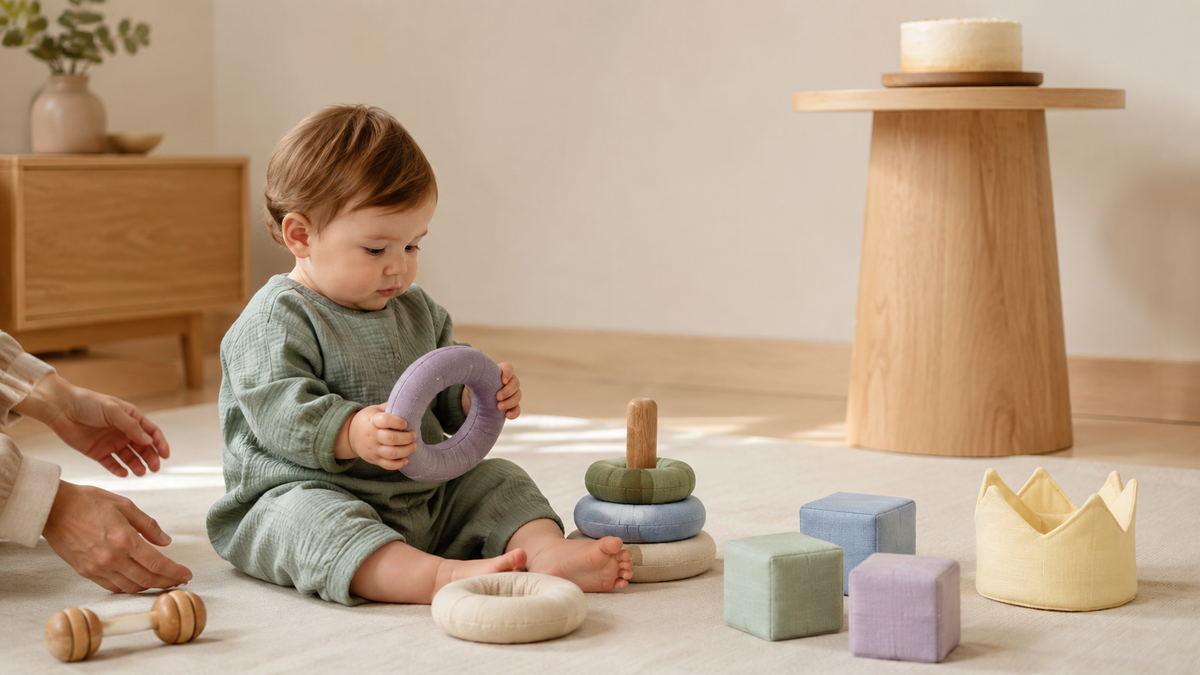
A clear section of floor gives babies room for supervised movement and gives toddlers space to build, sort, draw or play imaginatively. It does not need to be elaborate—a comfortable mat and a small number of carefully chosen activities are enough.
Explore baby play and activity essentials for simple pieces that support floor play, sensory discovery and early movement.
A reading corner
Place a small selection of books on a low, front-facing shelf or in an accessible basket. Seeing the covers makes choosing easier, especially before a child can recognise titles by their spines.
A cushion or small rug can define the area without taking up much room. Rotate books occasionally rather than displaying the entire collection at once.
A practical dressing area
As your child grows, a low basket with two suitable outfit choices can invite participation in getting dressed. A securely mounted mirror at the child’s height can also support body awareness and self-care routines.
Keep the choices limited. Independence is easier when the task feels manageable.
Choose furniture that supports real independence
Child-sized furniture is useful when it allows a child to sit down, stand up, reach materials or work comfortably without being lifted into place every time.
The most helpful pieces are usually:
-
A low bookshelf or accessible storage unit.
-
A stable child-sized table and chair.
-
Open storage for a small selection of toys.
-
Secure hooks or baskets for everyday belongings.
Look for stability, rounded edges, appropriate proportions and materials that suit the way the furniture will be used. Tall or climbable furniture should be securely anchored according to the manufacturer’s instructions.
Our children’s furniture collection includes accessible storage, tables, chairs and Montessori-inspired pieces for nurseries, playrooms and learning spaces.
For older preschool and school-age children, an adjustable workspace such as the Luula Montessori Table and Chair Set can provide a dedicated place for drawing, sensory play and focused activities while adapting as the child grows.
Use low, visible storage—but do not display everything
Open shelves work best when they are not overcrowded. If every toy is visible at once, the room can quickly feel busy, and choosing what to play with becomes harder.
Try placing one activity or a small group of related objects in each section of a shelf. Keep the rest elsewhere and rotate them when interest begins to fade.
This does not need to become another task-heavy parenting system. Even a simple rotation between two small groups of toys can make the space feel calmer.
Browse child-friendly storage and organisation for low bookshelves, accessible toy storage and pieces that help children understand where their belongings belong.
Choose fewer, more purposeful play materials
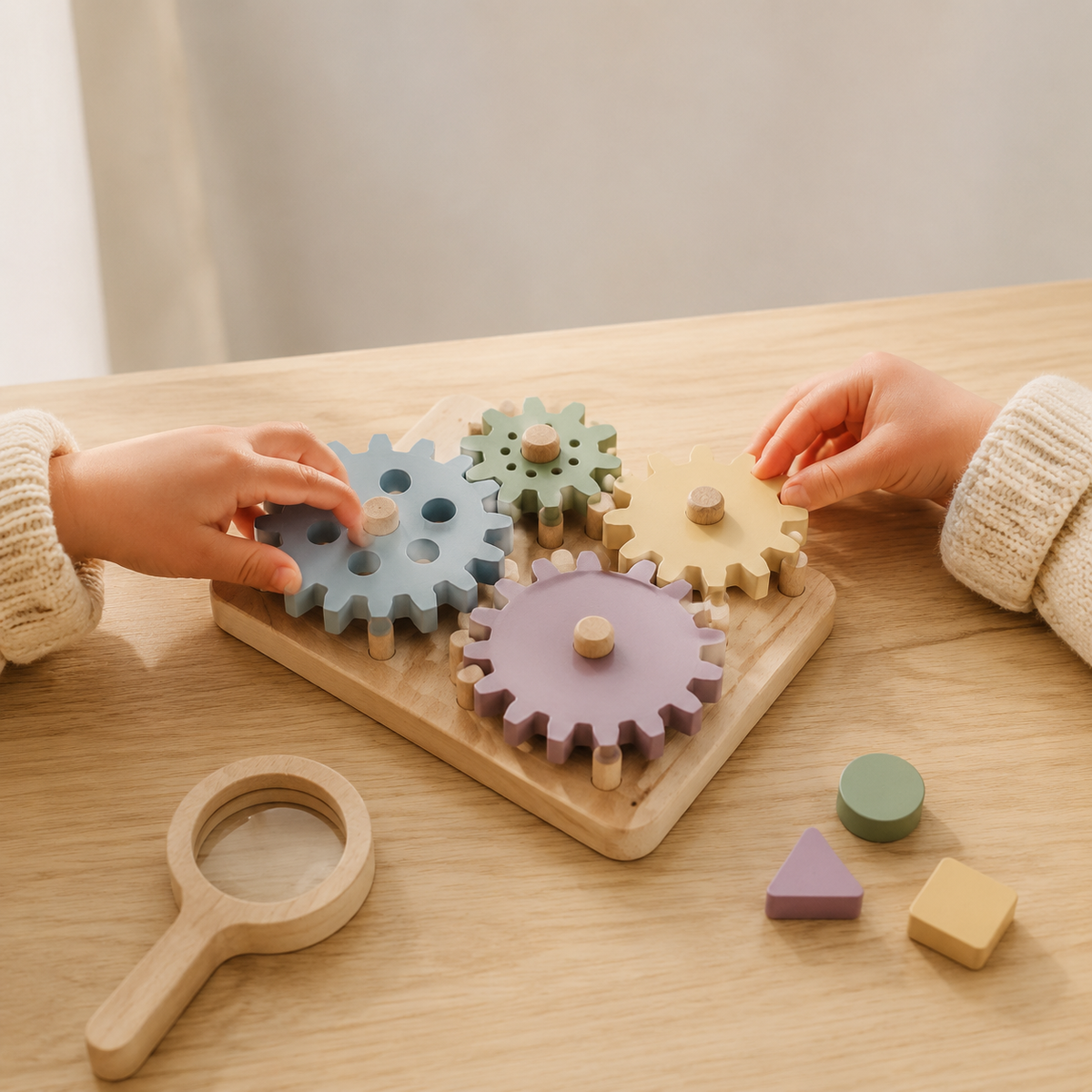
A Montessori-inspired play space usually favours materials that invite active participation. The child manipulates, builds, sorts, matches or imagines rather than simply pressing a button and watching the toy respond.
Useful options may include:
-
Stacking and sorting toys.
-
Simple puzzles.
-
Wooden blocks.
-
Objects for filling, transferring and arranging.
-
Art materials appropriate for the child’s age.
-
Realistic figures and open-ended play pieces.
Natural materials can add warmth and varied texture, but material alone does not make a toy educational. The activity should suit the child’s current abilities and offer just enough challenge without causing constant frustration.
Our wooden toys collection includes open-ended and skill-building options designed for hands-on, screen-free play.
Keep colours and decoration calm, not colourless
A calm room does not have to be beige. Children benefit from colour, personality and visual interest. The aim is simply to avoid making every surface compete for attention.
Start with a quieter foundation and add colour through books, artwork, textiles and a few favourite objects. Muted blue, sage, warm yellow, dusty lavender and natural wood can sit comfortably alongside brighter play materials.
Place artwork where the child can enjoy it, not only at adult eye level. Choose a few meaningful pieces and leave some open wall space so the room can breathe.
Plan lighting for both play and winding down
A nursery needs different kinds of light throughout the day. Natural daylight and a good main light help with play, dressing and cleaning. In the evening, a softer secondary light can support a calmer bedtime routine.
A night light should provide enough illumination for comfort or overnight care without making the room feel like daytime. Position cords, plugs and lamps outside the child’s reach and follow the product’s installation and safety instructions.
Explore our children’s lighting collection, including softly illuminated designs such as the Little Lights Penguin Lamp.
Build independence one routine at a time
The room itself cannot create independence overnight. What it can do is make small acts of participation possible.
Begin with one routine that matters in your home:
-
Choosing one of two books before bed.
-
Returning a toy to its shelf.
-
Putting clothes in a low laundry basket.
-
Sitting at a child-sized table for drawing.
-
Selecting between two suitable outfits.
Show the routine slowly, keep expectations realistic and allow time for practice. Young children will not always choose order, and a child-centred room will still become messy. The goal is participation, not perfection.
A simple Montessori nursery checklist
If you are starting from scratch—or simply refreshing an existing room—use this short checklist:
-
Observe the room from your child’s height.
-
Keep safe movement routes clear.
-
Create simple zones for sleep, play, books and dressing.
-
Choose stable, age-appropriate furniture.
-
Place a limited number of activities within reach.
-
Use accessible storage with a clear place for each item.
-
Anchor furniture and complete age-appropriate childproofing.
-
Introduce one independent routine at a time.
-
Adapt the room as your child grows.
A room that grows with the child
The best Montessori-inspired nursery is not the most perfectly styled one. It is the room that makes family life a little easier and gives the child more opportunities to participate.
Start with what you already have. Lower a few books, clear a section of floor or replace an overflowing toy display with a smaller, thoughtful selection. Over time, the room can change alongside your child’s movement, interests and daily routines.
Explore the complete Nursery & Room edit for furniture, lighting, textiles, storage and decor selected for calm, functional family spaces. For more ideas beyond the nursery, read how to bring Montessori-inspired principles into the wider home.
GRAVITALY JOURNAL