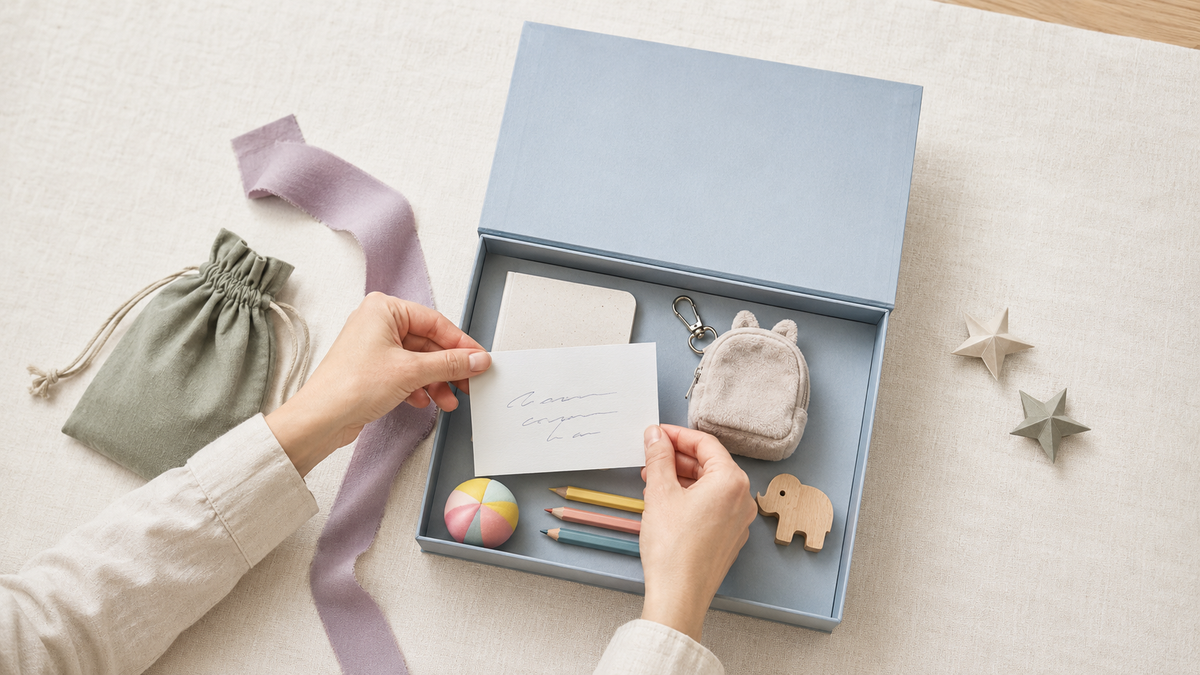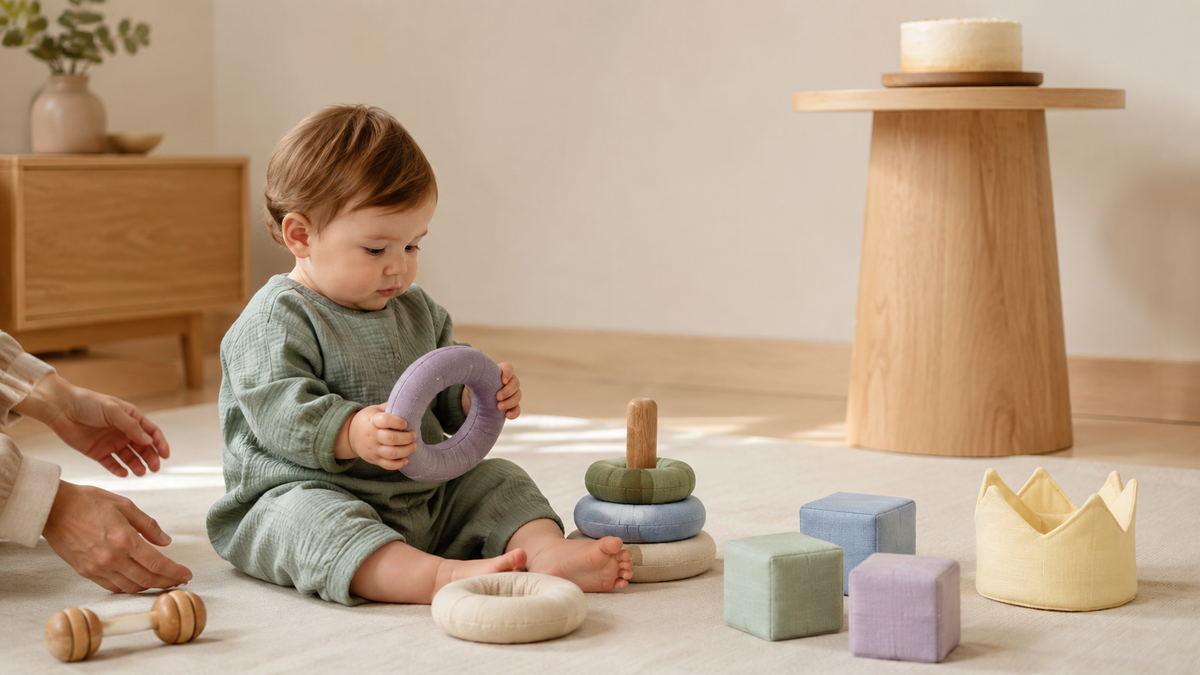
A wooden block does not look particularly impressive beside a toy that lights up, sings and performs three carefully rehearsed dances.
It does not explain what to do. It does not congratulate the child. It does not even have an on button.
Yet in a child’s hands, that block might become a tower, telephone, slice of cake, bridge, animal bed or precious parcel that must cross the living-room rug before sunset.
That is the quiet appeal of open-ended play.
Open-ended toys provide a starting point without deciding the entire experience. They offer materials and possibilities, then allow the child to choose what happens next.
What Is an Open-Ended Toy?
An open-ended toy can be used in several ways without one fixed outcome or correct finished result.
Common examples include:
-
wooden blocks;
-
flexible construction sets;
-
stacking and balancing pieces;
-
art and modelling materials;
-
dolls and simple figures;
-
play silks and uncomplicated costumes;
-
play tents;
-
age-appropriate loose parts;
-
versatile movement toys.
A child can return to the same toy with a different idea each time. Ten blocks may become a tower today, food in a pretend café tomorrow and a bridge for toy animals next week.
Open-ended does not mean purposeless. It means that the purpose is not completely decided in advance.
What Does Open-Ended Play Mean?
Open-ended play has no single required path or final result.
The child decides:
-
what the objects represent;
-
how they will be arranged;
-
whether there is a story;
-
what the rules are;
-
when the activity is finished;
-
what might happen differently next time.
The result does not need to be recognisable to an adult. A carefully arranged line of objects may be a road, a queue, a boundary or simply an experiment in position and pattern.
The important part is that the child is making the decisions.
Open-Ended vs Closed-Ended Toys
Closed-ended toys and activities have a defined objective, sequence or solution. Open-ended toys allow several possible outcomes.
Examples of closed-ended play include:
-
completing a puzzle;
-
matching each shape to the correct opening;
-
following instructions to make one model;
-
sorting objects according to a fixed rule;
-
pressing a button to produce a specific response.
Examples of open-ended play include:
-
building anything from loose pieces;
-
creating an original construction;
-
inventing a story with simple figures;
-
using fabric as a cape, roof or landscape;
-
deciding how several objects work together.
Neither type is automatically better.
A puzzle can provide a satisfying challenge. A shape sorter can invite repetition and problem-solving. A structured craft can help a child practise a particular technique.
Children benefit from both focused activities and flexible play. The distinction simply helps parents understand what kind of experience a toy offers.
How Can You Tell Whether a Toy Is Open-Ended?
Product descriptions often use the phrase “open-ended,” but the label alone is not enough.
Ask these questions before buying.
Can it become more than one thing?
Blocks can become buildings, roads, food, furniture or story props. A toy with one button and one response offers fewer possibilities.
Are several outcomes possible?
If every child’s finished result must look the same, the activity is more structured.
Can the child change the rules?
Open-ended play gives children some control over how the materials are combined and used.
Can it connect with existing toys?
Blocks may become a house for a soft animal. A play tent can hold books, costumes or a pretend shop. Flexible toys often work naturally with objects a child already owns.
Can the play become more complex?
A toddler may stack two pieces. A preschooler may build a town. An older child may design a balanced structure or construct the setting for a detailed story.
The more often the answer is yes, the more open-ended the toy is likely to be.
What Are the Benefits of Open-Ended Play?
Open-ended toys are sometimes described as though they automatically develop every possible childhood skill. No toy can guarantee that.
What they can provide are opportunities to practise different abilities through active, self-directed play.
Decision-making
When the toy does not give every instruction, the child has to decide where to begin, which materials to use and when an idea is finished.
Imagination
A simple object can represent something else. This allows children to invent places, characters, problems and stories.
Experimentation
Children can build, observe what happens and try another approach. A falling tower is not necessarily a failure—it is useful information about balance.
Problem-solving
When a structure does not work, the child can change its shape, choose another piece or begin again.
Language and storytelling
Pretend play creates reasons to describe ideas, name characters, negotiate roles and explain what is happening.
Social play
When children build or imagine together, they may share materials and create temporary rules. This does not guarantee perfect cooperation; two children can still hold very firm opinions about who needs the only purple block.
Longer-term use
The same materials may be used in more complex ways as the child’s coordination, language and ideas change.
These are possibilities rather than promised outcomes. Every play session does not need to produce visible progress.
Examples of Open-Ended Toys
Blocks and construction pieces
Blocks are a classic example because their meaning changes according to the child’s idea.
They can become:
-
towers and buildings;
-
roads and bridges;
-
pretend food;
-
beds for small characters;
-
objects for sorting and counting;
-
abstract structures.
Good construction materials offer enough flexibility for the child to move beyond the model shown on the packaging.
Explore Wooden Classic Toys for building, stacking and imaginative play materials.
Stacking and balancing toys
Some stacking toys have one intended arrangement. Others allow their pieces to be balanced, sorted and combined in several ways.
A child might use the same shapes to make a tower, landscape, bridge or piece of miniature furniture.
Do not rush to rebuild the “correct” structure whenever it falls. The wobble is part of the investigation.
Creative materials
Paper, crayons, paint, modelling materials and collage supplies are naturally open-ended when children can make their own choices.
A colouring activity with one expected result is more structured. A blank sheet and a manageable selection of materials leave more space for original ideas.
Process matters more than producing something that looks ready for display.
Dress-up and simple props
A simple cape, hat, basket or fabric piece can support many characters and stories.
Highly specific costumes can still inspire wonderful play, but flexible pieces allow the child to change roles without changing the entire outfit.
Today the cape may belong to a magician. Tomorrow it could be a royal cloak, picnic blanket or roof for a small den.
Dolls, animals and simple figures
Characters provide starting points for storytelling without dictating the plot.
They can travel through block cities, eat imaginary meals, visit a cardboard hospital or become involved in a family drama whose full background is apparently obvious to everyone except the adults.
Play tents and hideaways
A play tent can become:
-
a reading corner;
-
a house;
-
a shop;
-
a campsite;
-
a theatre;
-
a quiet retreat;
-
the headquarters of a highly secret organisation.
Before choosing a large play item, measure the available floor space and consider how it will be stored.
Movement toys
Balance boards, beams, stepping elements and some rockers can support both physical activity and imaginative play.
Depending on the product, they may become a bridge, road, stage, tunnel or part of an obstacle course.
Always follow the manufacturer’s age, weight, setup and supervision instructions. An imaginative use still needs to remain within the product’s safety guidance.
Everyday household objects
Open-ended play does not require every material to be sold as a toy.
Children may use suitable cardboard boxes, fabric pieces, baskets, wooden spoons and paper tubes in their games.
Adult judgement is essential. Avoid objects that are sharp, breakable, toxic, unstable or small enough to present a choking hazard.
A cardboard box combined with a few familiar toys can sometimes create more play than a complicated new product.
Are Montessori Toys Open-Ended?
Some are, but the terms are not interchangeable.
Traditional Montessori materials often isolate one concept or skill. They may have:
-
a defined purpose;
-
a particular sequence;
-
one intended method;
-
a built-in way for the child to notice an error.
Open-ended toys allow multiple uses and outcomes.
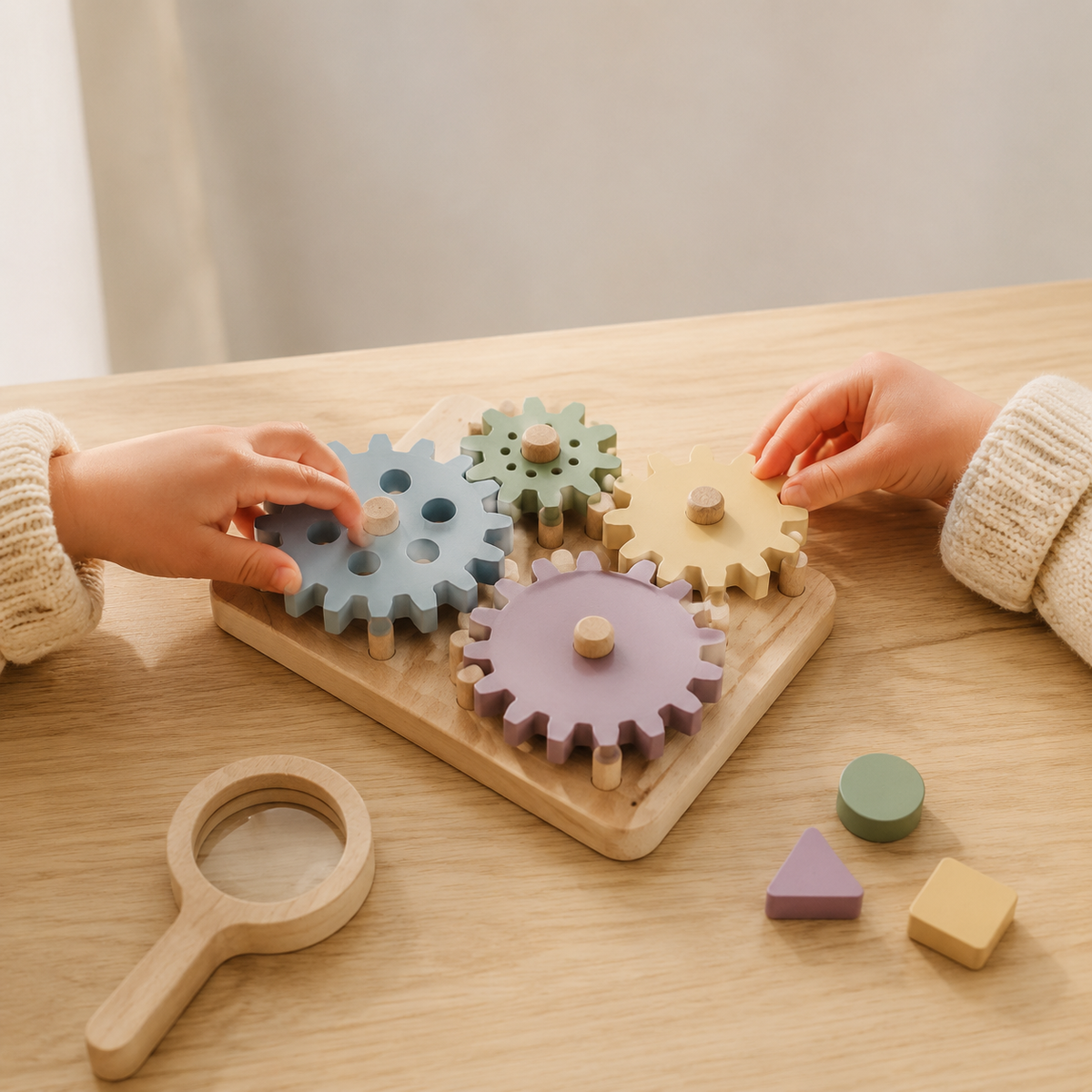
A sorting activity may be Montessori-inspired but relatively closed-ended. A set of geometric wooden pieces might support both careful hands-on exploration and flexible construction.
Neither approach is automatically superior. They serve different purposes and can comfortably exist in the same home.
For a closer look at the method, read The Montessori Method at Home.
Are All Wooden Toys Open-Ended?
No. Wood is a material, not a style of play.
A wooden puzzle with one correct solution remains primarily closed-ended. A wooden electronic toy does not become open-ended simply because its outer case is made from timber.
Equally, an open-ended toy does not need to be wooden. Fabric, cardboard, silicone, metal and other suitable materials can all support flexible play.
Look at what the child can do with the object, not only what it is made from.
Open-Ended Toys by Age
Always follow the manufacturer’s official age guidance. Within that boundary, flexible materials can be selected for different stages.
Babies under 12 months
Suitable options may include large soft blocks, textile stacking pieces and baby-safe sensory or grasping toys.
Babies often explore objects with their mouths, so every product must be specifically designed for their age and inspected regularly.
Toddlers aged 1–2
Consider large stacking pieces, simple blocks, soft characters, suitable art materials and age-appropriate movement toys.
Toddlers often repeat one action many times. Repetition is a natural part of exploration, not evidence that the toy is being used incorrectly.
Preschoolers aged 3–5
This is a rich stage for construction, dress-up, play tents, simple figures, creative materials and pretend shops or kitchens.
Preschoolers may begin combining several toys into one larger story.
Children aged 6 and over
Older children may use open-ended materials for detailed construction, photography, model-making, crafts, invented games and longer creative projects.
Open-ended play has no fixed expiry date. It simply becomes more complex and more closely connected to the child’s individual interests.
How Many Open-Ended Toys Does a Child Need?
Not many.
A small collection of flexible materials can offer more possibilities than a room filled with highly specific toys.
A useful selection might include:
-
one construction material;
-
one creative medium;
-
a few simple characters;
-
one pretend-play element;
-
one movement option;
-
accessible storage.
More open-ended toys do not automatically produce better play. Buying every beautiful wooden object still creates clutter.
Choose materials that offer genuinely different experiences and work well with what the child already owns.
How to Present Open-Ended Toys
The way toys are arranged can influence how approachable they feel.
Offer fewer choices
Too many visible options can make it difficult for a child to decide where to begin.
Keep related pieces together
Use a basket, tray or accessible box for construction elements and small characters.
Leave room to play
Children need clear floor or table space to arrange, build and change their ideas.
Rotate instead of constantly adding
Temporarily putting some toys away can make familiar materials feel noticeable again later.
Begin with a simple invitation
If the child is unsure, offer a small starting point:
-
Can you build a bridge for this animal?
-
Could these pieces make a tiny house?
-
Can you create something using only three colours?
-
What could we use as food for this pretend café?
An invitation should open the play, not determine the final result.
How Adults Can Support Open-Ended Play
Adults do not need to disappear, but it helps to leave space for the child’s ideas.
Observe before intervening
A structure that looks unstable may be an experiment the child needs to complete.
Ask fewer questions
Useful questions include:
-
What are you thinking of trying?
-
What happened when you changed that piece?
-
Is there something else you need?
-
Would you like me to join?
Avoid correcting safe, unexpected use
A block does not have to represent a block. Flexible interpretation is the central idea.
Protect uninterrupted time
Open-ended play may begin slowly. Constant suggestions can interrupt the child just as an idea is emerging.
Describe what you notice
Instead of evaluating the finished result, notice a specific decision:
“You balanced the smallest piece on top.”
This shows attention without suggesting that the child was working for adult approval.
What If a Child Does Not Know What to Make?
Complete freedom can feel unfamiliar, particularly when a child is used to highly directed activities.
Offer a small constraint:
-
Build something with five pieces.
-
Make a bed for this animal.
-
Create a bridge between two books.
-
Choose three colours for an imaginary town.
-
Build something a toy car can travel underneath.
A gentle limitation makes the starting point clearer without deciding the whole result.
You can also begin experimenting beside the child. Once they become involved, allow them to take the lead.
What to Check Before Buying
Before purchasing an open-ended toy, review:
-
the official recommended age;
-
dimensions;
-
materials and finishes;
-
small-parts warnings;
-
required assembly;
-
cleaning instructions;
-
supervision requirements;
-
weight limits for active products;
-
available play and storage space;
-
compatibility with toys already owned;
-
whether it genuinely offers several possibilities.
For furniture, tents and movement equipment, measure the intended area before ordering.
If you are still deciding what would suit a particular child, use the Gravitaly Gift Finder to explore ideas by age, interest and play style.
Choose Possibility, Not Perfection
An open-ended toy does not need to produce a beautiful finished structure.
The tower may fall. The cape may be worn backwards. The carefully arranged reading tent may become a parcel depot five minutes after an adult finishes styling it.
That is not the play going wrong.
It is the child taking ownership of it.
The value lies not only in what children make, but in the decisions, revisions, stories and experiments that happen along the way. Sometimes the toy that does the least creates the most room for a child to do something entirely their own.
GRAVITALY JOURNAL