Most parents are not trying to create a perfectly screen-free childhood.
They are trying to make dinner, finish some work and perhaps drink a cup of coffee while it is still warm. Screens are part of modern family life, and turning every choice into a battle rarely helps.
A better question is:
What can we offer beside the screen that feels genuinely worth choosing?
The best screen-free gifts invite children to take an active role. They give them something to build, move, invent, solve, create or care for. Instead of delivering a finished world, they provide the starting point for one.
What makes a good screen-free gift?
A good screen-free gift should suit the child, not simply the latest trend.
Look for something that:
-
connects with a genuine interest;
-
matches the child’s age and abilities;
-
gives the child an active role;
-
can be used without constant adult direction;
-
offers enough challenge without becoming frustrating;
-
fits the family’s available space;
-
is safe and practical to store;
-
has a reason to be used after the first day.
A toy does not become valuable merely because it has no screen. Children can lose interest in poorly chosen non-digital toys just as quickly as anything else.
The goal is not to find a gift that looks educational. It is to find something the child will want to do.
1. Open-ended toys for imaginative children
Open-ended toys do not prescribe one correct result. Their purpose can change whenever the child has a new idea.
A group of wooden shapes might become:
-
a tower;
-
a bridge;
-
a miniature village;
-
pretend food;
-
furniture for small figures;
-
part of an obstacle course;
-
an invention that adults are apparently not qualified to understand.
This flexibility makes open-ended toys particularly useful for children who enjoy building their own worlds and combining pieces from different sets.
When choosing, consider the size of the pieces, official age guidance, storage requirements and whether the toy complements anything the child already owns.
Explore wooden and classic toys, or read What Are Open-Ended Toys? for a fuller explanation of this style of play.
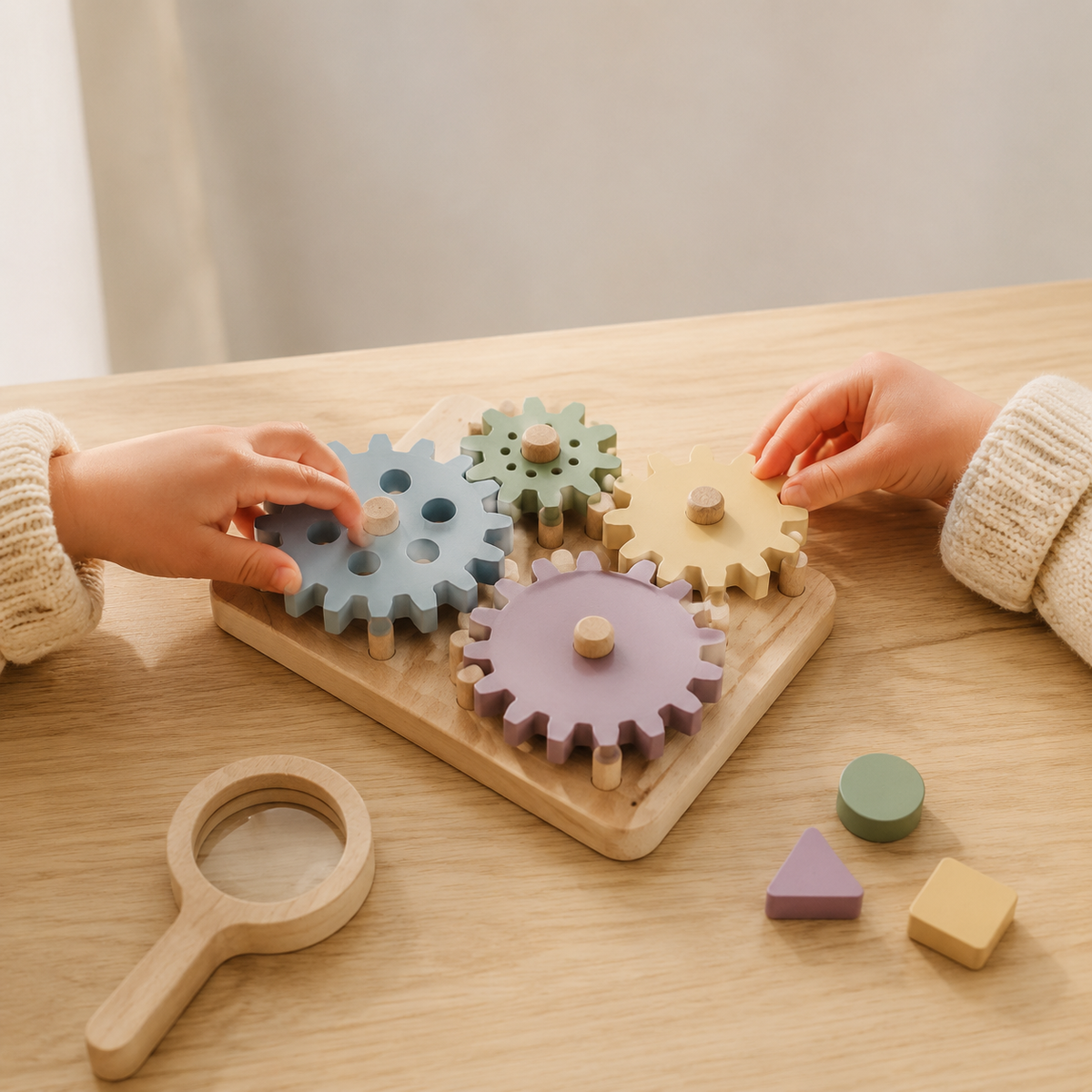
2. Construction toys and puzzles for problem-solvers
Some children are happiest when there is something to work out.
Construction toys invite them to test ideas, adjust unstable designs and begin again. Puzzles offer a clearer destination but still leave room for observation and experimentation.
Choose the level carefully. A gift that is too easy may be completed once and forgotten. One that is too difficult may require so much adult help that the child never feels ownership of the activity.
Consider:
-
the recommended age;
-
the size and number of pieces;
-
the child’s previous experience;
-
whether they prefer instructions or free building;
-
the fine-motor control required;
-
the amount of floor and storage space available.
A collapsing tower is not necessarily a failed activity. Sometimes it is simply useful information about what the next version needs.
Browse puzzles, builders and construction toys.
3. Arts and crafts for children who love making things
A creative gift offers something wonderfully personal: a result carrying the child’s own marks, decisions and happy accidents.
Depending on the child’s age, this might include:
-
drawing and painting materials;
-
modelling activities;
-
collage supplies;
-
threading or sewing projects;
-
paper construction;
-
jewellery-making kits;
-
age-appropriate DIY projects.
Look for enough structure to help the child begin, but not so much that every finished piece must look exactly like the picture on the box.
A small creative prompt can make the gift more inviting:
“Design a bedroom for a tiny dragon.”
“Create an animal nobody has discovered yet.”
“Draw a city where children make all the rules.”
“Make a birthday card for your future self.”
Explore arts, crafts and DIY activities.
4. Dress-up and role-play gifts for storytellers
Costumes and role-play props give children the raw materials for inventing characters, conversations and entire situations.
An open-ended cape might belong to a magician one day, a space explorer the next and the manager of a very serious shop under the dining table by the weekend.
Useful role-play gifts include:
-
capes and costume accessories;
-
dolls and figures;
-
puppets;
-
play food;
-
doctor or builder sets;
-
toy kitchens and shops;
-
animal characters;
-
simple storytelling props.
A costume linked to a specific character can be exciting, but a more flexible piece may support a wider variety of stories.
Browse dress-up and pretend-play gifts and creative role-play toys.
5. Play tents and hideaways for little world-builders
Children often enjoy having a small space that feels separate without being far away.
A play tent or canopy can become:
-
a reading corner;
-
a campsite;
-
a secret club;
-
a theatre;
-
a shop;
-
a quiet retreat;
-
the base for an expedition.
Before choosing one, check the complete dimensions rather than relying on styled photographs. Consider ceiling height, floor space, assembly, cleaning and where it will be stored when not in use.
A tent is most useful when there is still enough room for the child to play around it.
Explore play tents and hideaways.
6. Active gifts for children who need to move
Not every child wants to sit at a table to play. For some, the most appealing alternative to a screen is a reason to move.
Depending on age, ability and available space, active gifts might include:
-
ride-on toys;
-
balance bikes;
-
balance equipment;
-
climbing toys;
-
outdoor games;
-
balls;
-
skipping equipment;
-
exploration accessories.
Before purchasing a large active toy, check:
-
age, height and weight guidance;
-
assembled dimensions;
-
required safety clearance;
-
indoor or outdoor suitability;
-
flooring recommendations;
-
supervision requirements;
-
storage and maintenance.
Active play should offer an appropriate challenge without expecting the child to manage risks beyond their current abilities.
Browse ride-ons and bikes, climbing and balance toys or outdoor toys for children.
7. Soft toys for comfort and storytelling
A soft toy may look like a simple gift, but children rarely leave it without a personality for long.
It may acquire a name, a voice, a favourite meal and a surprisingly complicated family history. It can take part in storytelling, travel, reading and quieter moments.
Make the gift more personal by adding:
-
a homemade adoption certificate;
-
a small blanket;
-
a storybook;
-
a handwritten introduction;
-
an invitation to invent the character’s first adventure.
For babies and young children, check the product’s age and use guidance. Follow current safe-sleep recommendations and do not place unsuitable soft objects in an infant’s sleeping space.
Explore soft toys for children.
8. A creative space instead of another toy
For a child who already has plenty of toys, the most useful gift may be a place where existing activities can happen.
A child-sized table, chair or accessible storage area can support:
-
drawing;
-
puzzles;
-
building;
-
reading;
-
sensory play;
-
craft projects;
-
homework;
-
extremely important meetings with soft animals.
A useful creative space does not need to resemble a catalogue photograph. It needs to be comfortable, accessible and easy enough for the child to use without first moving a pile of adult belongings.
Large furniture gifts should always be discussed with the family. Check dimensions, assembly requirements, stability and age guidance before ordering.
Explore study and learning spaces for children.
Screen-free gift ideas by age
Age ranges are broad guides. Always follow the individual product’s official recommendation and consider the particular child’s abilities.
Babies under 12 months
Consider:
-
baby-safe sensory toys;
-
grasping toys;
-
rattles;
-
sturdy board books;
-
simple rolling toys;
-
tummy-time accessories.
Prioritise safe materials, easy-to-hold forms and products designed for the baby’s current stage.
Toddlers aged 1–2
Consider:
-
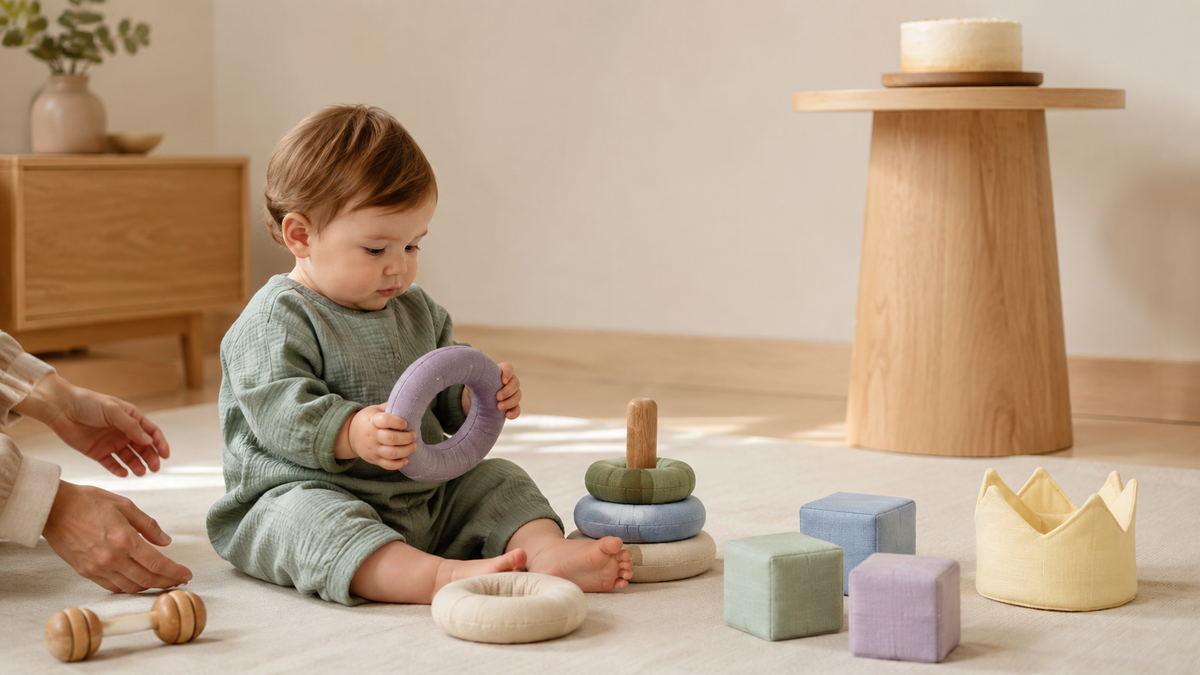
large stacking and sorting toys;
-
simple puzzles;
-
push-and-pull toys;
-
beginner ride-ons;
-
large building pieces;
-
uncomplicated pretend-play objects.
Toddlers often enjoy repeating the same action many times. Durability and manageable piece size matter more than a long list of features.
Children aged 3–5
Consider:
-
costumes;
-
building toys;
-
play tents;
-
art materials;
-
puppets;
-
simple games;
-
outdoor exploration gifts.
This is often a strong age for imaginative play, but the child’s current interests should guide the decision.
Children aged 6–8
Consider:
-
more detailed construction sets;
-
creative kits;
-
children’s cameras;
-
nature activities;
-
strategy games;
-
complex puzzles;
-
beginner craft tools.
Choose projects the child can begin without needing an adult to interpret every instruction.
Children aged 9 and over
Older children often appreciate authentic tools related to an existing interest:
-
photography;
-
art;
-
sewing;
-
model building;
-
science;
-
gardening;
-
strategy games;
-
outdoor hobbies.
Avoid gifts that feel educational only from an adult’s point of view. Older children usually recognise disguised homework quickly.
For more suggestions, use the gift guide by age.
Choose according to the child’s interests
Age is helpful, but interest is often the better predictor of whether a gift will be used.
For a child who often says “I’m bored”
Choose something with a quick starting point:
-
basic art materials;
-
an open-ended building set;
-
a costume accessory;
-
a small sensory toy;
-
a short family game.
Avoid presenting it as a compulsory activity. “Here is something you might try” feels very different from “You said you were bored, so now you have to use this.”
For a child who needs help beginning independent play
Start the activity together and gradually step back.
You might build the first part of a structure, introduce two characters, begin a drawing or play the first round of a game.
Independent play is a skill. Some children need a bridge, not an instruction to entertain themselves.
For a child who loses interest quickly
Look for something that can be used in several ways:
-
blocks;
-
art materials;
-
figures;
-
costumes;
-
photography;
-
outdoor exploration tools;
-
small-world play pieces.
A flexible object can return in new contexts long after its original novelty has faded.
For a child who already has too many toys
Consider:
-
consumable craft materials;
-
an accessory for an existing hobby;
-
a practical item with personality;
-
an experience paired with a small object;
-
storage or furniture that improves an existing play area;
-
one versatile toy rather than several novelty items.
Read What to Buy a Child Who Has Everything for more ideas.
How to make screen-free play more inviting
A new toy cannot carry full responsibility for the family’s screen routine. How it is introduced matters.
Make it visible
Children are more likely to use materials they can see and reach safely. A small rotating selection is often easier to explore than one overflowing toy box.
Begin with connection
Join the child for the first few minutes without taking control.
Instead of saying, “Here is how you are supposed to do it,” try:
“I wonder what we could make with this.”
Allow enough time
Open-ended play sometimes starts slowly. A child may not want to begin building an elaborate world ten minutes before leaving the house.
Present the alternative positively
Avoid describing the new toy as something morally superior to a favourite programme or game.
Try:
“Would you like to build something with me?”
“Shall we take this outside?”
“I have a challenge for these puppets.”
The invitation is more appealing when it does not begin with criticism.
Let play look imperfect
Creative play can be messy, repetitive and very different from the activity shown on the packaging.
That is not necessarily misuse.
It is often ownership.
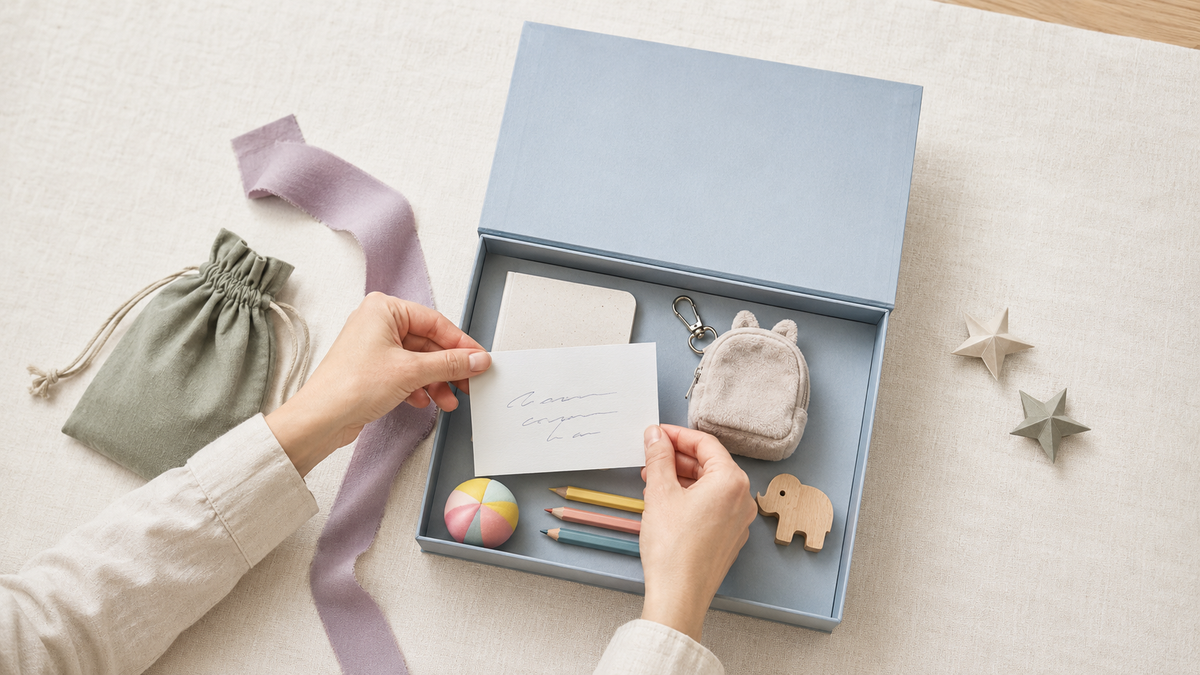
Create a simple screen-free gift box
A themed gift box can combine a few small activities without becoming overwhelming.
The Little Artist Box
Include:
-
drawing materials;
-
a notebook or sketchbook;
-
one simple craft activity;
-
a handwritten creative prompt.
The Builder Box
Include:
-
a construction toy;
-
a small figure or vehicle;
-
a challenge card;
-
a container for loose pieces.
The Outdoor Explorer Box
Include:
-
a reusable bottle;
-
a notebook;
-
coloured pencils;
-
an age-appropriate magnifier;
-
homemade observation cards.
Possible challenges include finding three leaf shapes, listening for five sounds or drawing the smallest natural object the child notices.
The Storyteller Box
Include:
-
a soft toy or puppet;
-
one open-ended costume accessory;
-
a notebook;
-
a homemade theatre ticket.
The box provides a beginning, not a required final result.
The best alternative to a screen is a meaningful invitation
Screen-free does not have to mean silent, neutral-coloured or serious.
It can be noisy, glittery, muddy, theatrical, energetic or deeply strange. It can involve a cardboard spaceship, a puppet with an unfortunate accent or a tower that collapses for the seventh time.
The best screen-free gift does not try to compete with technology by pretending it does not exist.
It gives the child a different kind of experience—one in which they decide what happens next.
Choose according to the child’s interests, age and available space. Offer enough support to help them begin, then leave room for the activity to become their own.
Browse all children’s toys, or use the Gravitaly Gift Finder to explore ideas by age and interest.
GRAVITALY JOURNAL