Choosing a children’s gift often begins with one simple question: how old are they?
Age is a useful starting point because it helps narrow down what a child can safely use, understand and enjoy. A baby may be absorbed by a soft sound or an easy-to-grasp shape. A toddler wants to carry, stack and test everything independently. A preschooler can turn a cardboard box into an entire world, while an older child may want a real challenge, a creative project or something that reflects a growing personal style.
But age is only part of the answer.
The best gifts also consider the individual child: what captures their attention, how they like to play, what they already own and whether they prefer movement, making, imagining, solving or collecting.
This guide will help you find age-appropriate gift ideas without treating children as numbers on a box.
Quick Gift Guide by Age
Babies aged 0–12 months
Look for simple products designed for sensory discovery, grasping, reaching and shared interaction.
Thoughtful ideas include:
-
lightweight rattles;
-
baby-safe teethers;
-
soft activity toys;
-
tactile play accessories;
-
supervised tummy-time toys;
-
first soft companions.
Explore gifts for babies aged 0–12 months.
Toddlers aged 1–2 years
Choose toys that invite movement, repetition, sorting, stacking and early pretend play.
Good options include:
-
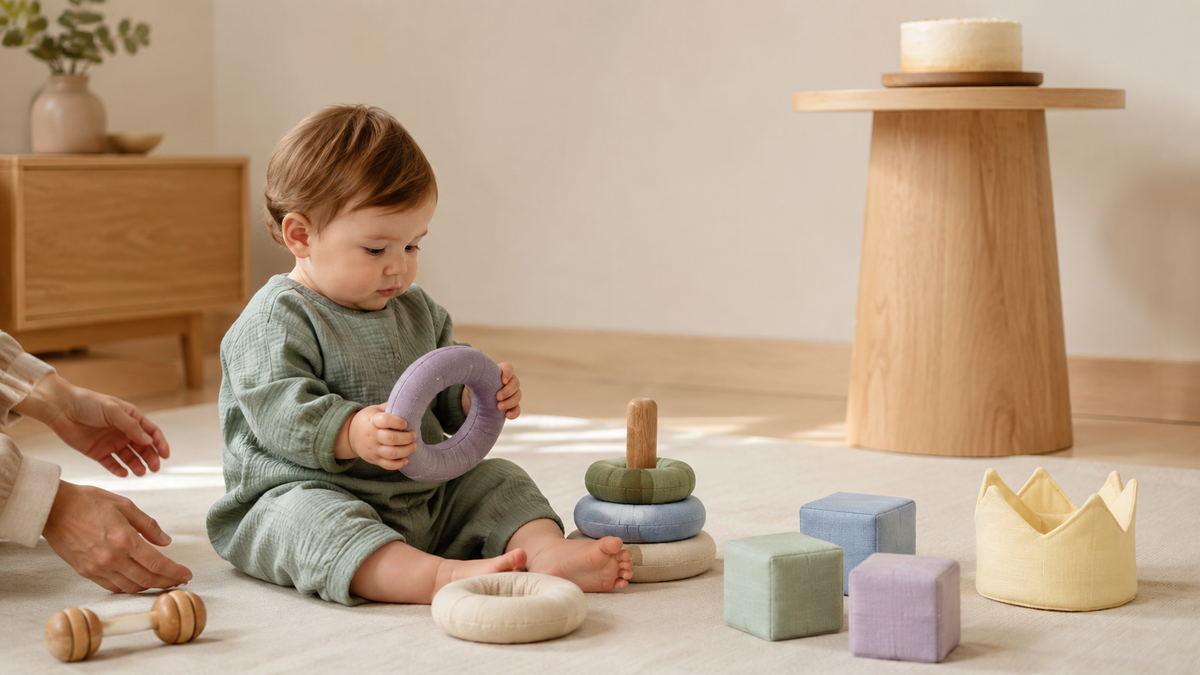
stacking and nesting toys;
-
shape sorters;
-
simple puzzles;
-
push-and-pull toys;
-
age-appropriate ride-ons;
-
blocks and first building toys.
Explore gifts for children aged 1–2 years.
Children aged 3–5 years
Preschoolers often enjoy imaginative worlds, creative freedom and hands-on challenges they can complete with growing independence.
Consider:
-
dress-up and role-play toys;
-
art and craft activities;
-
building sets;
-
puppets and storytelling toys;
-
beginner games and puzzles;
-
play tents and hideaways.
Explore gifts for children aged 3–5 years.
Children aged 6–8 years
At this stage, children often want to practise skills, complete projects and explore more detailed interests.
Popular ideas include:
-
construction and STEM activities;
-
creative kits;
-
strategy games;
-
children’s cameras;
-
outdoor and active-play gifts;
-
sensory and collectible favourites.
Explore gifts for children aged 6–8 years.
Children aged 9–10 years
Older primary-school children often appreciate greater complexity, genuine creative choice and gifts connected to a particular interest.
Consider:
-
advanced building sets;
-
challenging puzzles and games;
-
photography gifts;
-
art and design projects;
-
outdoor equipment;
-
school, travel and room accessories.
Explore gifts for children aged 9–10 years.
Children aged 11 and over
Pre-teens and older children usually want gifts that respect their abilities, interests and personal style.
Thoughtful options include:
-
advanced creative tools;
-
STEM and strategy challenges;
-
photography accessories;
-
design-led room décor;
-
distinctive school accessories;
-
experience-and-object combinations.
Explore gifts for children aged 11 and over.
Development does not follow an exact calendar. Use these groups as a guide, then check the individual product’s official minimum age, warnings and intended use.
Gifts for Babies Aged 0–12 Months
A baby does not need a toy that performs an entire concert.
During the first year, everyday sights, sounds, textures and movements are already new. A gentle rattle, an easy-to-hold shape or a safe tactile surface may be more engaging than a product filled with flashing lights and competing features.
Useful baby gifts often support simple interaction:
-
looking and visually following;
-
reaching and grasping;
-
listening to gentle sounds;
-
exploring safe textures;
-
moving during supervised floor play;
-
sharing attention with a parent or caregiver.
Practical details matter at this age. Check the recommended age, materials, dimensions and cleaning instructions. Establish whether the product is designed for supervised play, teething, comfort or sleep.
Not every soft toy is suitable for an infant’s sleep space. Follow the product instructions and the current safe-sleep guidance applicable in your country.
For a newborn or baby shower, a small, beautifully made product that can be used regularly is often more valuable than a complicated toy the child will quickly outgrow.
Gifts for Toddlers Aged 1–2 Years
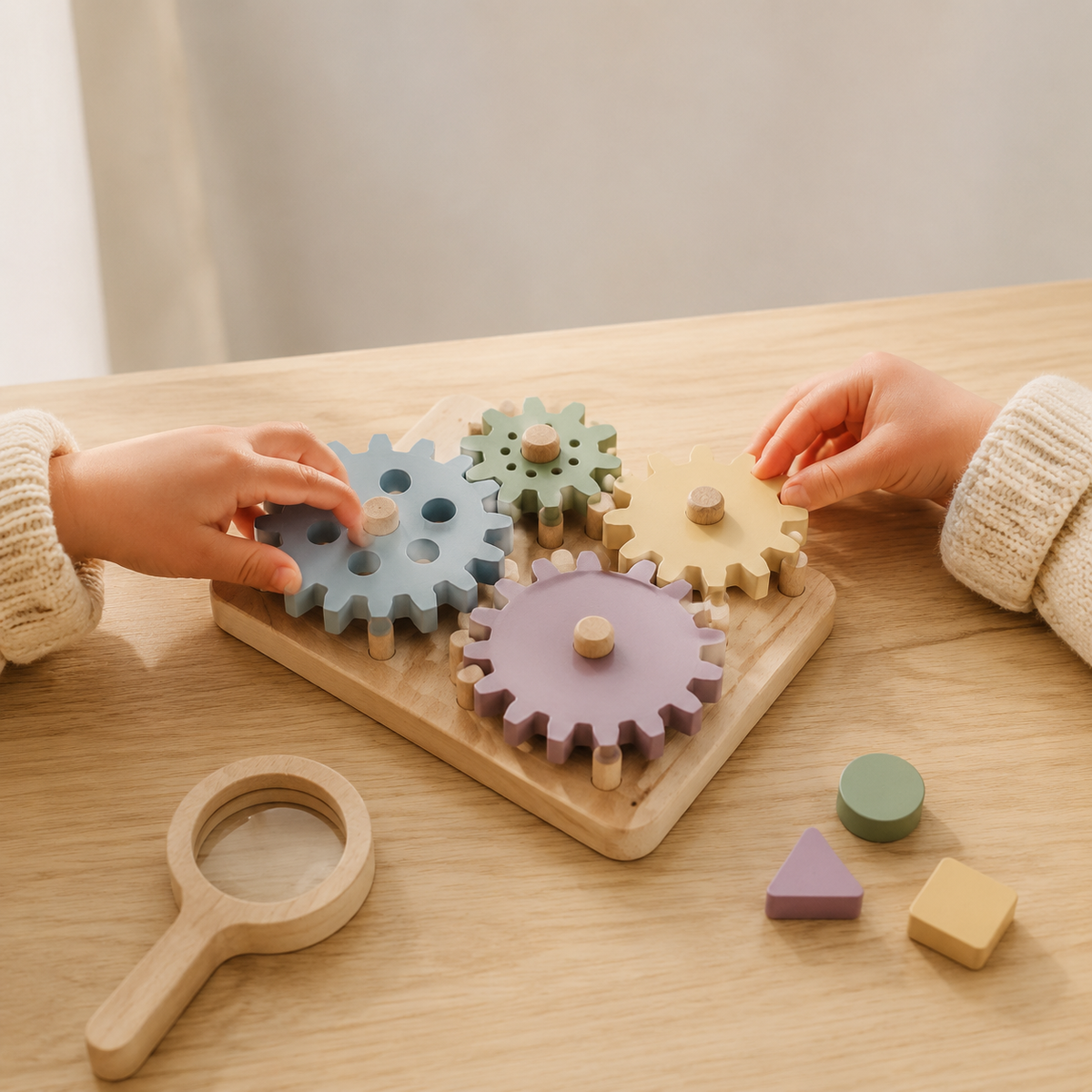
Toddlers learn by doing the same thing repeatedly—and then doing it once more to make absolutely certain.
They fill containers, empty them, build towers and knock them down. They carry objects from room to room for reasons known only to them. Their play is physical, curious and increasingly independent.
Good toddler gifts allow children to:
-
stack and balance;
-
fit and sort;
-
push, pull and carry;
-
open and close;
-
build and rebuild;
-
copy familiar everyday actions.
Simple puzzles, blocks, shape sorters and stacking toys offer a clear challenge without demanding a single perfect way to play.
Movement toys can also be appealing as walking becomes more confident. When choosing a ride-on, rocker or climbing product, check the stated age, dimensions, weight limit, intended surface and supervision requirements.
The best challenge for a toddler feels achievable after a few attempts. It should encourage another try, not turn playtime into an entrance examination.
Gifts for Children Aged 3–5 Years
Between three and five, imagination becomes wonderfully convincing.
A scarf is a superhero cape. A row of chairs is a train. A wooden block can be cake, a telephone or an emergency tool required for an invisible rescue mission.
Preschoolers often enjoy gifts that leave room for their own ideas:
-
costumes without a fixed character;
-
puppets and small-world figures;
-
open-ended building materials;
-
play tents;
-
art supplies;
-
pretend shops, kitchens and tool sets.
Creative activities work best when the child can experiment rather than copy one perfect example. The uneven painting, unusual colour choice or structurally questionable cardboard castle is part of the process.
At this age, construction toys and beginner puzzles can offer satisfying problems to solve. Choose an appropriate number and size of pieces, and remember that a child may use the materials for an entirely different game.
For more focused inspiration, read our guide to the best gifts for children aged 3–5.
Gifts for Children Aged 6–8 Years
Children in the early school years often want to demonstrate what they can do.
They may practise a new skill repeatedly, develop a detailed interest or spend several days completing a project. Gifts that balance clear structure with personal choice tend to work especially well.
Consider:
-
construction sets with multiple possible outcomes;
-
creative projects that produce something worth keeping;
-
beginner STEM activities;
-
games that introduce rules and strategy;
-
child-friendly cameras;
-
outdoor toys that invite active participation.
Collecting may also become more important. Children might organise objects by character, colour, rarity or category—and develop rules that adults are expected to understand immediately.
Sensory and fidget toys can be chosen for tactile play, travel, collecting or simple enjoyment. They should not be presented as guaranteed treatments for anxiety, concentration difficulties or sensory needs.
A strong gift for this age says, “Here is something interesting you can learn to do,” while still leaving room for play.
Gifts for Children Aged 9–10 Years
Nine- and ten-year-olds are still playful, but they are often more selective about what feels too young, too easy or simply not right for them.
Personal interests matter more now. One child may want to draw for hours, another may be fascinated by photography, engineering, sport, animals or a very specific collection.
Good options include:
-
creative kits with genuine design choices;
-
advanced building and construction sets;
-
strategy games;
-
detailed puzzles;
-
cameras and visual storytelling tools;
-
outdoor equipment connected to an existing interest.
Avoid choosing only because a product looks educational. A well-designed activity is useful only if the child actually wants to engage with it.
When possible, ask about recent interests. Children at this age can move quickly from a general curiosity to impressive expertise in one surprisingly specific subject.
Practical gifts can also work well when they express personality. A distinctive pencil case, backpack charm, bottle or room accessory may be used more often than another large toy.
Gifts for Children Aged 11 and Over
Choosing for an older child can be deceptively difficult.
They may still love toys, collectables and soft characters but reject anything that appears to underestimate them. They are developing stronger preferences about appearance, identity and how they spend their time.
The most useful approach is respect.
Look for:
-
art and craft materials that feel authentic;
-
complex STEM or construction challenges;
-
photography and printing accessories;
-
strategy games to share with friends or family;
-
room décor chosen with their input;
-
accessories connected to a hobby or personal style.
Instead of giving only an object, consider pairing it with an experience:
-
a camera with a family photo walk;
-
art materials with a creative afternoon;
-
outdoor equipment with a planned adventure;
-
a game with a promise to play the first round together;
-
room décor with the freedom to redesign a favourite corner.
Play does not disappear when children become older. It evolves into hobbies, projects, humour, collecting, creativity and time shared with friends.
How to Choose Between Two Age Groups
Children do not replace one way of playing with another on their birthday.
If a child sits between two age ranges, consider:
-
the manufacturer’s official minimum age;
-
small-parts and other safety warnings;
-
the child’s experience with similar activities;
-
the coordination or reading required;
-
the number and complexity of steps;
-
how easily the child becomes frustrated;
-
whether adult help will be available;
-
the child’s current interests.
Never move into an older category when it conflicts with the product’s safety guidance.
More complicated does not automatically mean more valuable. The right level of challenge allows the child to begin independently while leaving something new to discover.
Should You Choose an Educational or Fun Gift?
The distinction is often less useful than it sounds.
Children learn through movement, repetition, stories, construction, experimentation and conversation. A costume can prompt storytelling. Blocks can invite planning. A camera encourages closer observation. A pretend shop can involve counting, negotiation and language.
That does not mean every gift needs to promise a developmental outcome.
A toy does not automatically build a skill simply because it carries an educational label. What matters is whether it is appropriate, engaging and used in a way that allows the child to participate actively.
Instead of asking whether a gift is educational, ask:
-
Will the child want to use it?
-
Does it match an existing interest?
-
Can it be explored in more than one way?
-
Is the challenge suitable?
-
Is there room for the child’s own decisions?
The most thoughtful gifts often sit naturally between fun and discovery.
What to Give a Child Who Already Has Plenty of Toys
Another large toy is not always the answer.
Consider something that changes how the child plays rather than simply adding more objects:
-
art or craft materials that will be used up;
-
an accessory for an existing hobby;
-
storage that makes a collection easier to enjoy;
-
a camera or journal for documenting adventures;
-
a room light or decorative piece;
-
an experience paired with a small keepsake;
-
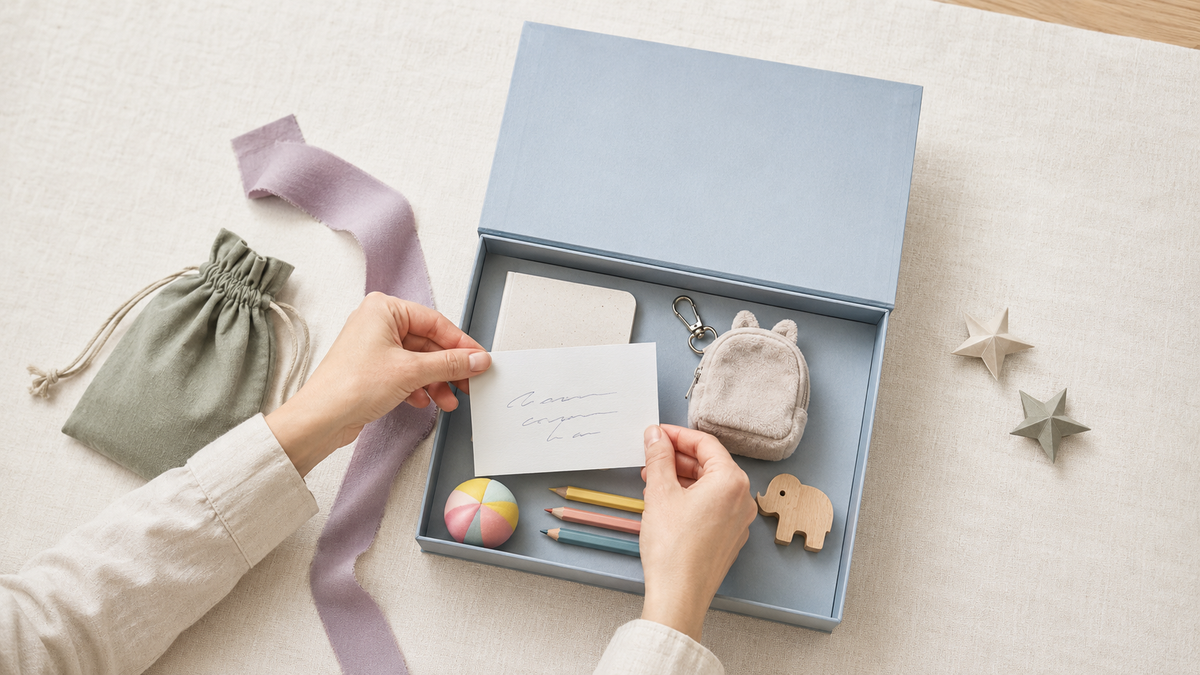
a personalised box built around one interest.
Our guide to gifts for children who have everything offers more ideas for avoiding novelty purchases and unnecessary clutter.
A Practical Checklist Before Buying
Before choosing a child’s gift, ask:
-
Is it officially suitable for the child’s age?
-
Have I checked the warnings and supervision requirements?
-
Does it connect to something the child currently enjoys?
-
Is the challenge appropriate for their abilities?
-
Do they have enough space to use and store it?
-
Will it require adult assembly or ongoing help?
-
Can the child make meaningful choices while using it?
-
Does the family already own something very similar?
-
Am I choosing for the real child rather than an age stereotype?
-
Could I make the gift more personal with a message or shared activity?
You do not need a perfect answer to every question. The checklist simply helps turn a broadly suitable present into one that feels genuinely chosen.
The Best Gift Fits the Child, Not Just the Age
Age guides help us navigate safety, complexity and common ways of playing. They make a useful first filter, especially when shopping for a child we do not know very well.
But children are not checklists.
One four-year-old may spend every afternoon building. Another may prefer stories and dress-up. One eight-year-old wants to explore outdoors; another is happiest drawing imaginary cities. An eleven-year-old may enjoy photography, an advanced construction project and an absurdly soft collectable at the same time.
The right gift does not rush a child forward or tell them who they should become. It meets them where they are and gives their curiosity somewhere to go next.
Use the Gravitaly Gift Finder to explore ideas by age, interest, occasion and style of play.
GRAVITALY JOURNAL