There is a particular kind of birthday invitation that can make even an experienced gift-giver pause:
“They already have everything.”
Their shelves are full. They own the popular toys, several construction sets and perhaps a small mountain of soft animals. You want to bring something that creates genuine excitement—not another object that receives a polite smile, is used for ten minutes and quietly disappears into a drawer.
The answer is rarely to find something bigger or more expensive. The best gifts for children who have everything offer a new experience, a fresh way to play or the feeling that someone has truly noticed who they are.
Quick answer: What do you give a child who has everything?
Choose a gift that offers at least one of the following:
-
A shared experience.
-
An element of surprise.
-
A new creative challenge.
-
Several possible ways to play.
-
A connection to the child’s current interests.
-
Something useful for an upcoming milestone.
-
A personal space or object that feels truly theirs.
-
Materials that can be used up, transformed or replenished.
Instead of asking, “What toy don’t they already own?”, ask:
“What does this child enjoy doing—and what could help them do it in a new way?”
Before you buy, learn three things
When possible, ask the parent three short questions:
-
What is the child interested in right now?
-
Is there anything the family does not want more of?
-
How much space do they have?
These questions are especially helpful before choosing large toys, noisy products, collectibles or items with many small pieces.
If you do not know the family well, start with the child’s age and choose something flexible rather than highly specific. The Gravitaly Gift Finder can help you explore ideas by age, interest, occasion and budget.
1. Give an experience you can share
A child who owns many things may value something that creates anticipation and time together.
Experience gifts might include:
-
Tickets to a children’s theatre performance.
-
A visit to a science centre, zoo or aquarium.
-
A pottery, cooking or art workshop.
-
A family cinema afternoon.
-
A picnic and outdoor treasure hunt.
-
A day trip chosen around the child’s interests.
-
A homemade voucher for baking, crafting or building together.
Make the experience feel tangible by adding a small clue. Wrap a paintbrush with an art-class voucher, a magnifying glass with plans for a nature walk or a notebook with tickets for a day trip.
The physical object gives the child something to open. The experience gives the gift its story.
2. Choose a surprise rather than another predictable toy
For children who enjoy collecting and unboxing, the mystery itself can be part of the gift.
The Surprise Squishy Box contains a random selection of colourful squishy toys. The child does not know exactly which designs will appear, creating guessing, anticipation and plenty to examine once the box is opened.
A surprise box can work particularly well for:
-
Birthdays and celebrations.
-
Children who enjoy collecting.
-
Siblings who can open the box together.
-
Party activities.
-
Dividing several small surprises across different days.
Because the exact contents are not selected individually, it is less suitable for children who prefer predictability or have strong preferences about textures and designs.
Always check the product’s recommended age and safety information before ordering.
3. Give something that can become many different things
Children with full toy shelves may not need another single-purpose product. An open-ended toy can offer a genuinely different play experience because the child decides what it becomes.
Blocks might form a tower today, food for an imaginary café tomorrow and a home for small animals next week. A play cape can belong to an explorer, magician, messenger or entirely new character.
Good open-ended options include:
-
Building blocks.
-
Flexible construction sets.
-
Stacking and balancing pieces.
-
Play fabrics and simple costumes.
-
Figures and soft characters.
-
Modelling materials.
-
Play tents and hideaways.
-
Art supplies without one required outcome.
Read our practical guide to open-ended toys to understand what makes a toy genuinely flexible.
4. Match the gift to how the child actually plays
Age recommendations are essential for safety, but age alone does not reveal what a child will enjoy.
Think about what the child chooses when nobody directs the play.
For the storyteller
Look for dolls, figures, costumes, puppets and spaces that help stories unfold.
For the builder
Choose construction pieces, balancing toys, puzzles or mechanisms that can be explored repeatedly.
For the young artist
Offer good-quality drawing materials, modelling compounds, paints or a creative kit suited to the child’s age.
For the collector
Choose a display solution, storage case or one carefully selected addition rather than beginning another enormous collection.
For the child who is always moving
Consider outdoor play, a physical challenge, a family activity or equipment that suits the available space.
For the quiet observer
Books, puzzles, sensory objects and detailed creative projects may be more appealing than a large, high-energy toy.
The strongest gift is rarely the one that could impress every child. It is the one that feels chosen for this particular child.
5. Give creative materials that will eventually be used up
Consumable gifts are ideal for homes that do not need more permanent objects.
Depending on the child’s age, consider:
-
Drawing paper and quality pencils.
-
Washable paints.
-
Modelling materials.
-
Chalk.
-
Stickers.
-
Beads or craft components appropriate for the child’s age.
-
Simple sewing or weaving supplies.
-
A child-friendly baking mix and recipe.
-
Gardening materials.
-
A scrapbook or journal.
Creative supplies change each time they are used and gradually disappear into pictures, models, cards and experiments.
Explore arts, crafts and DIY activities for projects that give children something to make rather than another finished object to store.
Before choosing, check the official age recommendation, required supervision and whether the family is comfortable with the level of mess involved.
6. Create a themed mini gift
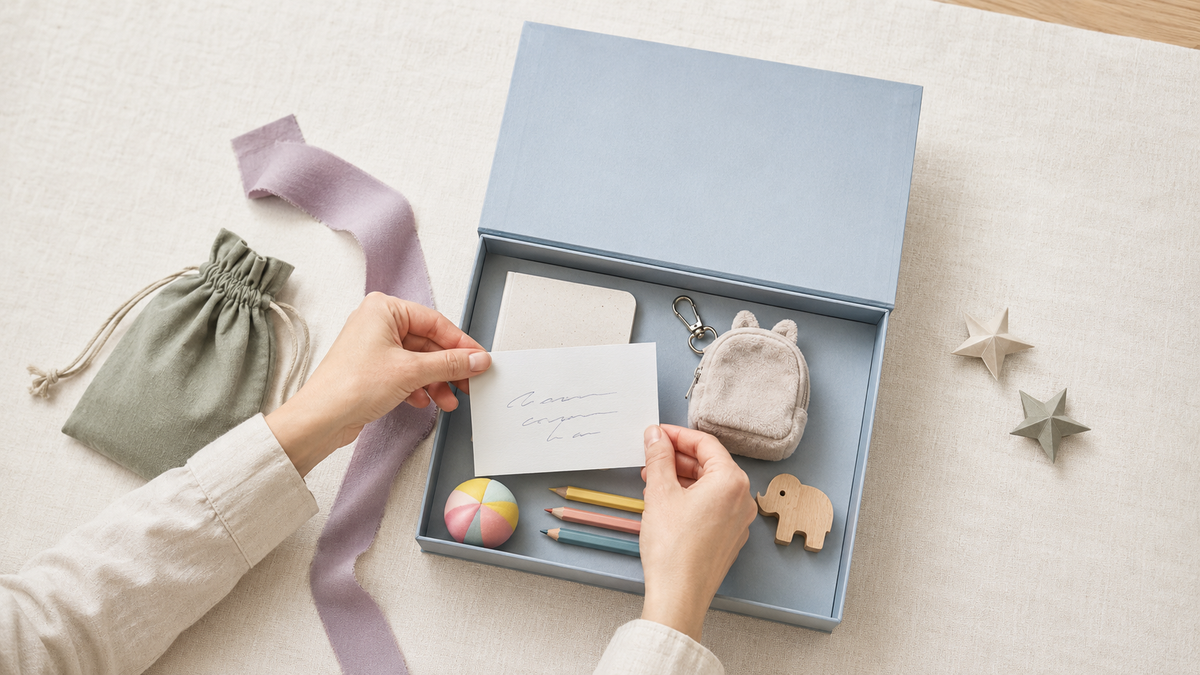
Two or three connected items can feel more personal than one oversized present.
The trick is to build around one clear idea rather than adding unrelated fillers.
The Little Artist
Combine a creative activity, a small set of drawing materials and a pouch for supplies.
The Young Explorer
Pair a notebook with a small backpack, bottle or nature-themed activity.
The Quiet Afternoon
Choose a picture book, a soft companion and a simple puzzle or tactile activity.
The Make-Believe Box
Combine one costume accessory with a wand, crown, mask or storytelling prop.
The Builder’s Challenge
Choose a construction toy and add a handwritten card with three playful building prompts.
A themed combination shows that the gift was assembled around the child’s personality rather than selected quickly from a generic list.
Browse gift sets for babies and children if you prefer a coordinated set prepared around one type of play or milestone.
7. Give a personal space of their own
Children often value small spaces that feel separate from the adult world.
A canopy, play tent or reading corner can transform an ordinary part of a bedroom or playroom into:
-
A secret headquarters.
-
A library.
-
A pretend shop.
-
A cosy resting place.
-
A campsite.
-
A stage.
-
A home for favourite soft animals.
The space does not need to be large. A cushion, small rug and basket of books can create a meaningful reading corner.
Before buying a tent, canopy or furniture piece, always check with the parent. Confirm the assembled dimensions, ceiling height, installation requirements and available floor space.
A surprise is lovely. A large box that cannot fit through the planned corner is less helpful.
8. Upgrade something the child already loves
When a child has an established interest, avoid searching for a completely unrelated novelty. A thoughtful upgrade may be more successful.
For example:
-
Add unusual colours to art materials they already use.
-
Choose more advanced construction pieces for a keen builder.
-
Give a storage or display solution to a collector.
-
Add a new costume accessory to an existing dress-up box.
-
Choose a field guide for a child interested in animals or nature.
-
Provide a better case, bag or organiser for a favourite activity.
The aim is not simply to buy more of the same. It is to notice what the child already returns to and help that interest deepen.
9. Choose a practical gift for a new milestone
A practical object can carry real emotional meaning when it marks growing independence.
Their own backpack, lunch box or water bottle can say:
“This belongs to you. You are ready for what comes next.”
Milestone gifts work well for:
-
Starting nursery.
-
Beginning school.
-
Joining a sports club.
-
Taking a first trip without parents.
-
Attending a first sleepover.
-
Moving into a “big kid” room.
-
Starting an art, music or dance class.
Choose a design connected to the child’s interests and check that its size and features suit the intended use.
Practical does not have to mean boring. An everyday object can quickly become a favourite when it makes the child feel capable and included.
10. Give a book with a reason behind it
A book becomes more meaningful when the giver explains why it was chosen.
You might select:
-
A story you loved at the same age.
-
A book connected to the child’s current interest.
-
A funny read-aloud story for the whole family.
-
A guide to drawing, nature or simple experiments.
-
A beautiful edition intended to be kept.
-
A blank book for the child’s own stories.
Write a short message inside the cover with the date. Avoid making the inscription so elaborate that the family feels unable to exchange the book if they already own it—check first when possible.
For a child with a large library, consider pairing one book with an experience: a story about forests and a woodland walk, or a recipe book and an afternoon of baking together.
11. Give something personalised—but choose carefully
Personalisation can turn an ordinary object into something that feels unmistakably theirs.
Names, initials, favourite colours and handwritten details can work well on:
-
Bags and pouches.
-
Notebooks.
-
Storage boxes.
-
Art folders.
-
Bedroom signs.
-
Bookplates.
-
Handmade vouchers.
Check spelling carefully and confirm the name the child actually uses.
Also consider privacy. It may be better to place initials or a small internal name label on belongings used in public rather than displaying the child’s full name prominently.
12. Give permission, time or responsibility
Some of the most memorable gifts are not conventional products at all.
A child might love:
-
Choosing the family meal for one evening.
-
Planning a living-room campout.
-
Redesigning one small corner of their room.
-
Staying up slightly later for a film night.
-
Inviting a friend for a creative afternoon.
-
Caring for a small family garden patch.
-
Becoming the official photographer on a day trip.
Present the idea in a card or handmade voucher. Be specific about what the gift includes and arrange a realistic date, so the promise does not disappear into a drawer.
What should you avoid?
Even a beautiful gift can become a burden when it does not suit the child or household.
Be cautious with:
-
Very large toys that have not been discussed with the parents.
-
Products that create significant noise.
-
Gifts requiring an ongoing subscription.
-
Items with expensive refills or accessories.
-
Pets or living creatures.
-
Toys below the child’s current developmental level.
-
Products with small parts for a home with younger siblings.
-
Highly specific character products when you do not know the child’s preferences.
-
Gifts chosen mainly to impress other adults.
A receipt or straightforward exchange option can be part of thoughtful gifting, not an admission of failure.
Use this five-question test before buying
Before adding a gift to your basket, ask:
-
Does it match the child’s current interests?
-
Can the child participate actively?
-
Does it offer more than one brief moment of excitement?
-
Is it suitable for their age, abilities and household?
-
Does the family have the space and appetite for it?
If you can answer yes to most of these questions, you are probably looking at a considered choice.
How much should you spend?
There is no correct amount. Your relationship with the child, the occasion and your personal budget matter more than the size of the box.
A small present paired with genuine attention can be more memorable than an expensive gift chosen without much thought.
If you need a smaller option, explore gifts under €20 or create a simple experience voucher at home.
The best gift says, “I see you”
A child who has many possessions does not need the rarest, biggest or most expensive item you can find.
They need something chosen with attention.
It might be a mystery box that creates a wonderful unboxing moment. It might be art materials that disappear into a month of drawings, a cape that begins a new imaginary world or a practical backpack for a very important first day.
The magic is not in finding something no other child has ever owned. It is in choosing a gift that feels right for the child standing in front of you.
Use the Gravitaly Gift Finder to discover thoughtful ideas based on age, interests, occasion and budget.
GRAVITALY JOURNAL