Viac než len hra: Ako Montessori edukačné hračky budujú sociálne zručnosti a emočnú inteligenciu
byKristina Krumova
on
(Translation of content provided in snippet 80)
✦✧
GRAVITALY JOURNAL
Často kladené otázky
Can Montessori toys teach social skills?
Montessori-inspired toys cannot teach social skills automatically, but they can create opportunities for children to practise taking turns, communicating, sharing materials and solving problems with others.
Which toys are useful for cooperative play?
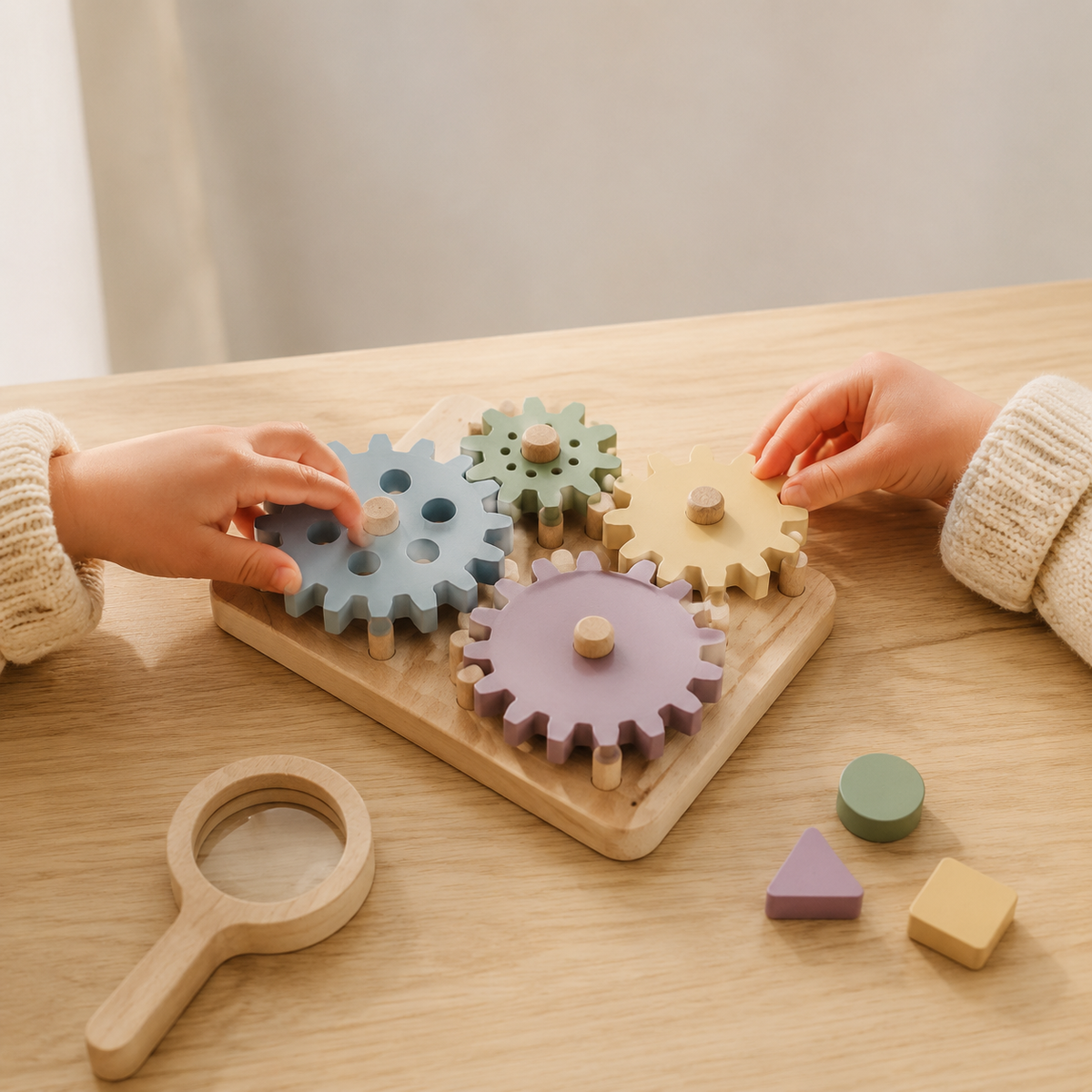
Blocks, flexible construction sets, puzzles, pretend-play materials and activities with enough pieces for several participants can support cooperative play. The toy should suit the ages and abilities of all participating children.
Is independent play important for social development?
Yes. Independent play gives children opportunities to follow an idea, concentrate and manage small frustrations. These abilities can later support more successful interactions with other children.
Are wooden toys better for emotional development?
Not automatically. Wood provides a particular weight and texture and can be durable, but the material alone does not develop emotional skills. The design of the activity and the way children and adults use it are more important.
Should adults intervene when children argue over a toy?
Adults can pause briefly when the children are safe and appear capable of attempting a solution. They should intervene when the conflict escalates, a child becomes overwhelmed or someone’s safety or boundaries are at risk.
How can I help a shy child join cooperative play?
Begin with parallel play or a simple shared activity that does not require constant conversation. Avoid forcing participation. The child may first observe, play beside someone or contribute one small part before joining more actively.
How can siblings with an an age gap play together?
Choose materials that are safe for the youngest child, offer enough pieces and allow each sibling to participate at their own level. Do not expect the older child to teach continuously or include the younger child in every project.