Starting school is a big step, and not only for the child. There are new routines to learn, unfamiliar faces to meet and a surprising number of small belongings to keep track of.
A thoughtful starting-school gift can make the transition feel a little more familiar. It does not need to be expensive or elaborate. The best choices are usually practical items the child can recognise, manage and enjoy using every day.
A well-fitting backpack, an easy-to-open lunch box or a cheerful water bottle may seem ordinary to an adult. To a child, each one can quietly say: “This is mine. I know how to use it. I’m getting ready.”
What makes a good starting-school gift?
A good gift for a child starting nursery, preschool or primary school should be:
-
useful in their new daily routine;
-
appropriate for their age and size;
-
easy for them to open, carry or organise;
-
durable enough for regular use;
-
compatible with the school’s requirements;
-
chosen with the child’s personality in mind.
You do not need to buy everything at once. One carefully selected item, accompanied by a short handwritten message, can feel more meaningful than a large collection of unnecessary school supplies.
1. A backpack that fits the child
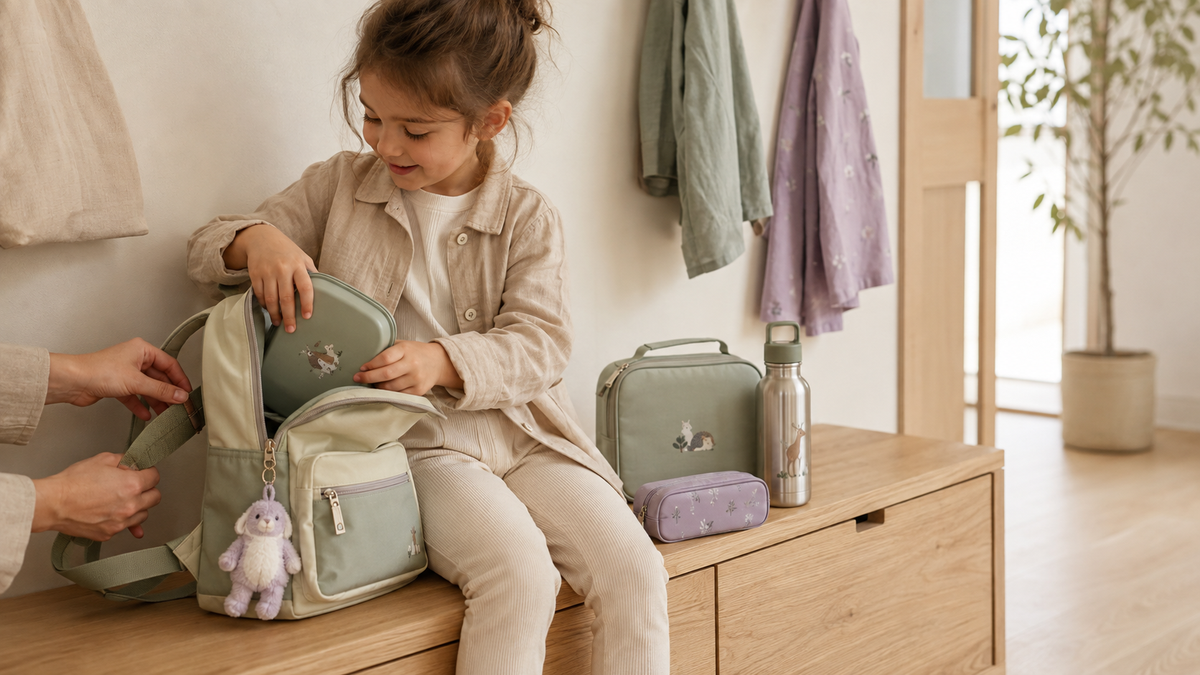
A backpack is one of the most useful gifts for a child starting school. It becomes part of the morning routine and gives lunch, spare clothes and small personal belongings a consistent place.
The design matters, especially to the child, but fit and comfort should come first.
Before choosing a backpack, check:
-
the recommended age;
-
the external dimensions;
-
the empty weight;
-
the capacity;
-
whether the straps are adjustable;
-
how easily the child can manage the zips and fastenings;
-
whether it fits the items requested by the school.
A backpack should sit comfortably without overwhelming the child’s frame. Bigger is not always more practical, particularly for nursery and preschool children.
Browse kids’ backpacks and bags and compare the measurements rather than choosing by appearance alone.
Practise before the first day
Let the child try the backpack at home with a light, realistic load. Ask them to practise putting it on, taking it off and opening each compartment.
This is a small step, but it removes one unfamiliar task from an already busy first day.
2. A lunch box they can open independently
A lunch box is only helpful when the child can open it without a lengthy struggle.
Before school begins, place a familiar snack inside and let the child practise the whole routine: opening the box, taking out the food and closing it again.
Look for:
-
a simple fastening;
-
manageable weight;
-
food-safe materials;
-
suitable compartments;
-
clear care instructions;
-
leak resistance where specifically stated;
-
dimensions that fit the child’s lunch bag.
Do not assume that every lunch box is leakproof or insulated. Always follow the information provided for the individual product.
Explore lunch boxes for children and check the measurements before combining a box with a separate lunch bag.
3. A reusable water bottle
A reusable bottle is another everyday essential that can make a practical starting-school gift.
Choose a capacity that suits the child’s age and the length of their day. A larger bottle carries more water, but it also becomes heavier when full.
The child should be able to:
-
hold the bottle comfortably;
-
open and close it;
-
drink without difficulty;
-
secure the lid correctly;
-
return it to the bag or bottle pocket.
Practise this routine at home and test the closed bottle according to its instructions before placing it beside books or spare clothing.
You can compare sizes and designs in the children’s water bottles and cups collection.
4. A lunch bag for longer days
For a child taking meals or several snacks, an insulated lunch bag can help keep everything together.
Check that it has enough space for the intended lunch box, bottle and snacks without becoming difficult to carry. Consider the fastening, handle, lining and cleaning instructions too.
Insulation performance varies between products. Food should be prepared, packed and stored according to the manufacturer’s instructions and the school’s arrangements.
A coordinated lunch set can be exciting, but the pieces do not need to match perfectly. It is more important that they fit together and that the child can use them independently.
5. A pencil case with a few useful supplies
A pencil case can feel wonderfully grown-up, even when the child does not yet have a long stationery list.
Keep the contents simple. A few age-appropriate pencils, crayons or drawing tools are more useful than an overfilled case that is difficult to organise.
Before buying supplies, check what the school provides and what children are expected to bring. Some schools request specific materials, while others prefer pupils not to carry their own stationery.
A short note hidden inside can turn an ordinary pencil case into a personal gift:
“For all the ideas you haven’t drawn yet.”
“Small pencils. Big adventures.”
“For questions, stories and excellent doodles.”
6. A small backpack charm
A backpack charm can help a child recognise their bag and add a little personality to a practical item.
It may also become a familiar character that accompanies them on the walk to school, even if it stays attached to the bag during the day.
Browse backpack charms for small character-led accessories.
Before attaching one, check that:
-
the fastening is secure;
-
there are no loose or unsuitable small parts;
-
it will not catch easily on furniture;
-
hanging accessories are allowed by the school.
For younger children, an internal label, coloured ribbon or distinctive bag design may be a simpler alternative.
7. A notebook for drawings and small discoveries
A notebook is inexpensive, personal and easy to adapt to different ages.
For younger children, it can become a drawing book or a place for stickers. Older children may use it for stories, questions, lists or memories from their first weeks.
Avoid turning it into compulsory homework. Offer an occasional, open prompt instead:
“Draw one thing that surprised you today.”
“What was the funniest part of your day?”
“Show me something you noticed on the way to school.”
Some children do not want to give a full report immediately after a long day. Drawing can offer a gentler way to begin the conversation.
8. A creative space at home
Starting school does not mean that the home needs to become another classroom. A small, accessible place for drawing, reading, puzzles and later schoolwork can still make everyday routines easier.
A useful children’s workspace needs:
-
furniture appropriate for the child’s size;
-
comfortable seating;
-
suitable lighting;
-
accessible creative materials;
-
simple storage;
-
enough space to work without constant rearranging.
The goal is not a picture-perfect desk. It is a place where the child can begin an activity independently.
Explore study and learning spaces for children if you are planning a longer-lasting milestone gift.
Starting-school gifts by age
For nursery
Keep belongings small, light and easy to recognise. A compact backpack, simple lunch container, lightweight bottle or familiar bag accessory is usually enough.
Adults will manage much of the routine, but the child can still begin learning where their belongings go.
For preschool
Preschool children may be ready to practise opening their lunch box, managing a bottle and placing belongings in consistent compartments.
A backpack, lunch set, pencil case or notebook can help them participate in the preparation without creating unnecessary pressure.
For a more detailed packing guide, read the preschool backpack checklist.
For primary school
At primary-school age, children often have stronger opinions about colours, designs and characters. Letting them choose between two or three practical options can give them a useful sense of ownership.
Check the school’s requirements before purchasing bags, stationery or accessories.
Three simple starting-school gift sets
The first-day set
Combine:
-
a child-sized backpack;
-
a reusable bottle;
-
a handwritten encouragement card.
This is a useful option for nursery, preschool or the first year of primary school.
The lunchtime set
Combine:
-
a lunch bag;
-
a compatible lunch box;
-
a reusable bottle.
Confirm that all three items fit together before ordering.
The little artist set
Combine:
-
a pencil case;
-
a few drawing materials;
-
a notebook;
-
a simple creative prompt.
This works particularly well for a child who enjoys drawing and making things.
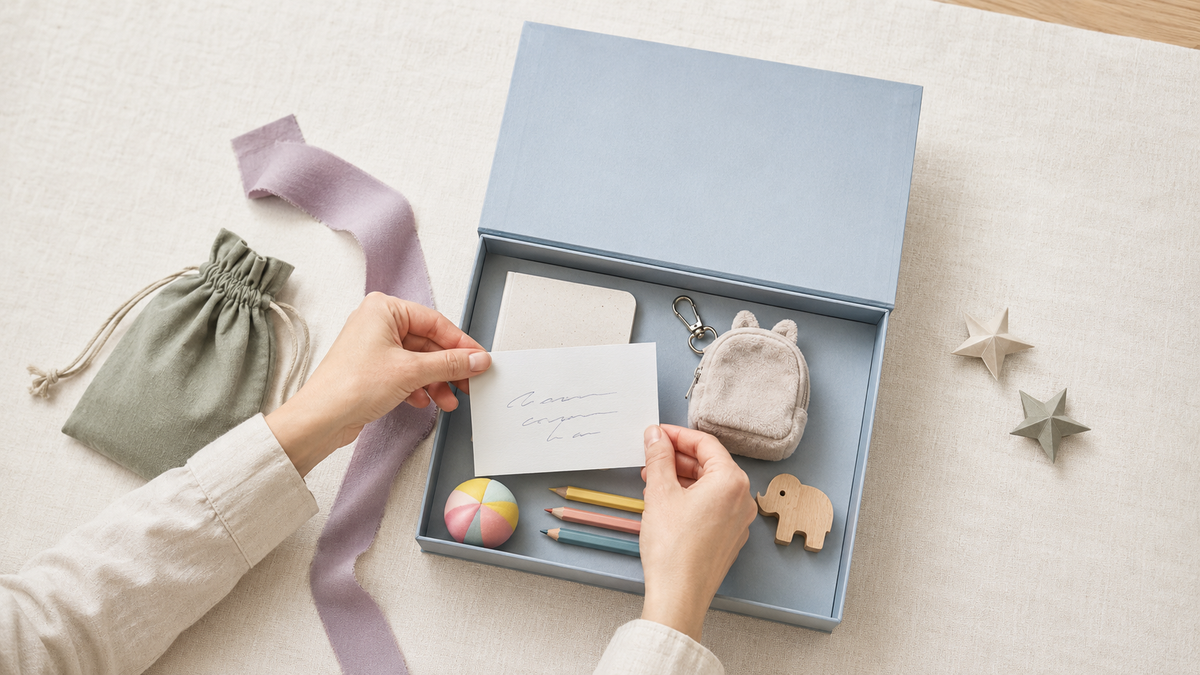
Add a message instead of another object
A practical gift becomes more personal when it includes a few honest words from someone the child trusts.
You might write:
“A new adventure begins today. You do not need to know everything yet. You can ask questions, take your time and try again. We cannot wait to hear about the little things you notice.”
Try not to make confidence another task the child has to complete. Phrases such as “Big children don’t cry” or “There’s nothing to worry about” can accidentally dismiss very normal feelings.
A gentler message might be:
“It is okay to feel excited and unsure at the same time.”
“You can ask an adult when you need help.”
“You do not have to know everything on the first day.”
“We will be here when the day is finished.”
Help the child practise the routine
One of the most useful gifts you can give is time to rehearse the practical parts of the day.
Before school begins, practise:
-
packing and unpacking the bag;
-
opening the lunch box;
-
using and closing the bottle;
-
putting on a coat;
-
recognising labelled belongings;
-
returning everything to the same place at home.
Keep the practice relaxed. Instead of saying, “You need to know this for school,” try, “Let’s see how this works.”
The aim is familiarity, not a test.
A final checklist before the first day
Before using new school essentials:
-
wash food and drink containers as instructed;
-
test lids, seals and fastenings;
-
adjust backpack straps;
-
check the total packed weight;
-
confirm that the lunch box fits the lunch bag;
-
label belongings according to school guidance;
-
check whether charms and comfort items are permitted;
-
remove unsuitable loose or small parts;
-
follow food-storage and hygiene instructions.
Avoid displaying the child’s full name prominently on the outside of a backpack unless the school specifically requires it. Follow the institution’s own labelling and safeguarding guidance.
The best gift is a feeling of readiness
A new backpack cannot remove every first-day worry. A favourite bottle will not make every unfamiliar moment easy.
What these objects can do is give the child small points of recognition in a new environment. They help turn a vague future event into a routine that has already been practised.
Choose one or two things the child will genuinely use. Let them participate in the preparation. Add a few reassuring words and leave space for mixed emotions.
The best starting-school gift is not a reward for acting brave. It is a practical, personal way to say:
“You are beginning something new, and we are here to help you get ready.”
Use the Gravitaly Gift Finder to explore more gift ideas by age and interest.
GRAVITALY JOURNAL